Parents as tennis coaches are common in junior tennis, where families often play a major role in a young player’s development. They drive to training sessions, organize tournaments, provide financial support and, in some cases, take direct responsibility for coaching their child.
But some parents go one step further: they become the coach.
The parent-coach relationship has produced some of the greatest players in tennis history. It has also created difficult situations when the boundaries between family life and competitive tennis became blurred.
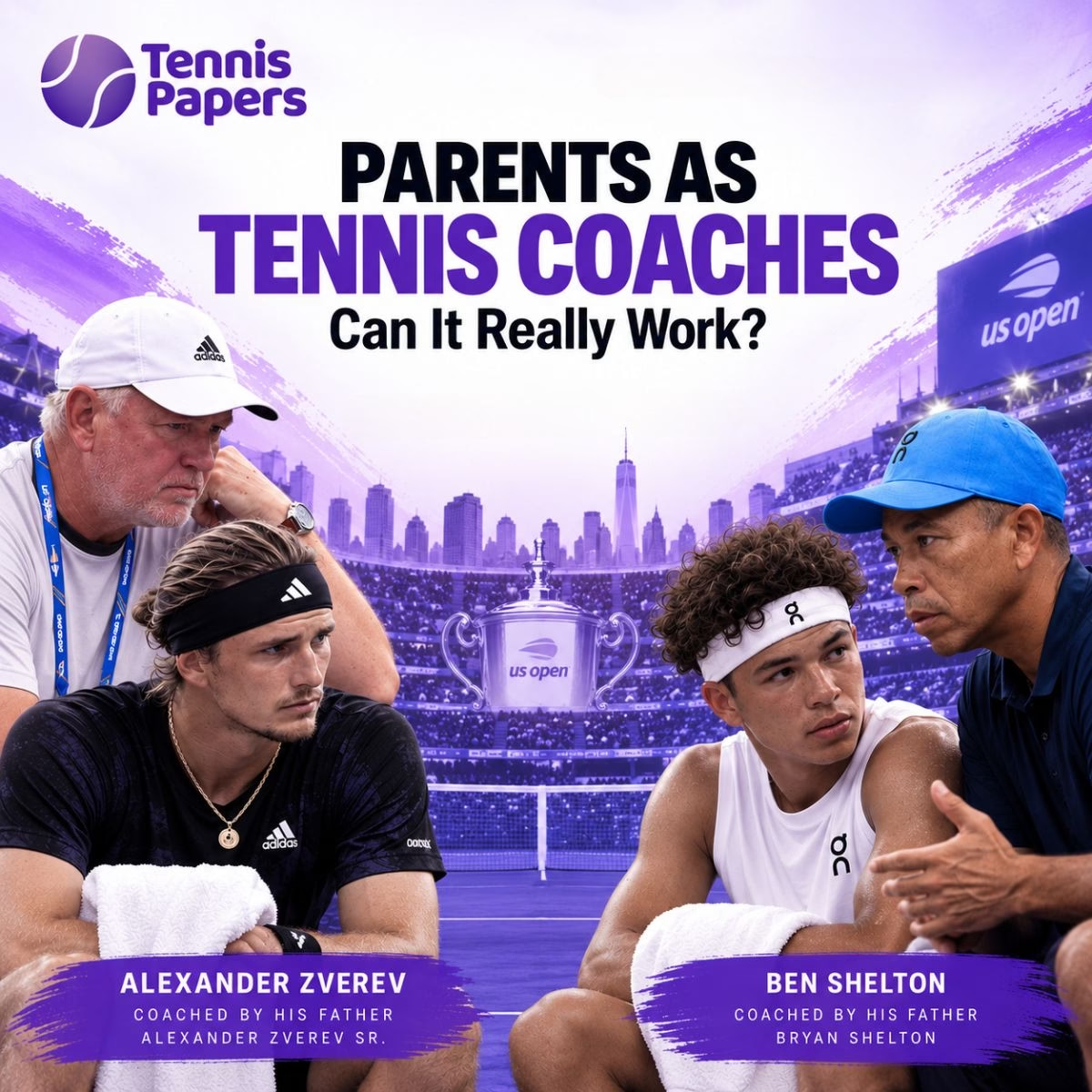
The 2026 US Open provided a remarkable example. The men’s singles final between Alexander Zverev and Ben Shelton featured two players coached by their fathers — Alexander Zverev Sr. and Bryan Shelton.
So can a parent successfully coach their own child? And what can junior tennis families learn from some of the most famous examples in the sport?
Why Do Parents Become Tennis Coaches?
For many young players, the first person helping them on a tennis court is a parent.
At the beginning of a junior career, this can happen naturally. A parent feeds balls, organizes practice sessions, watches matches and gradually becomes increasingly involved in the player’s development.
There are several potential advantages.
A parent knows the child extremely well and may understand their personality, emotions and motivation better than an outside coach. There is usually a very high level of trust, and the parent may also be willing to invest considerably more time in the player than a conventional coach could.
Cost is another factor. Developing a competitive junior player can involve coaching fees, travel, tournament entries, equipment and accommodation. A knowledgeable parent who can supervise part of the training may considerably reduce the cost of development.
But coaching your own child also creates challenges that do not exist in a conventional player-coach relationship.
The Biggest Challenge: Being Both Parent and Coach
A professional coach can finish a training session and go home.
A parent cannot.
The discussion about the missed forehand, poor attitude or lost match can potentially continue in the car, at dinner and at home.
This is where boundaries become particularly important.
Alexander Zverev has explained that one of the reasons his relationship with his father works is their ability to separate the two roles. At tournaments, Alexander Zverev Sr. primarily acts as his coach.
That distinction may be one of the most important lessons for parents coaching junior players.
A child still needs a parent regardless of what happened on the tennis court.
The history of professional tennis provides several fascinating examples of parents as tennis coaches, with very different approaches and outcomes.
Famous Parent-Coach Partnerships in Tennis
Tennis history provides many different examples of family coaching. Some became extraordinarily successful long-term partnerships. Others eventually required the player and parent to separate professionally.
Richard Williams — Venus and Serena Williams

Richard Williams with his daughters Venus and Serena Williams at Wimbledon. Photo: Paulobrad / Wikimedia Commons / CC BY-SA 4.0
Perhaps the most famous example of parental coaching in tennis is Richard Williams.
Richard began teaching Venus and Serena Williams despite having no previous background as an elite tennis coach. He studied the sport and developed a long-term plan for his daughters while they were still children.
Both eventually became World No.1 players.
Serena won 23 Grand Slam singles titles during the Open Era, while Venus won seven, giving the sisters 30 major singles titles between them.
Their story demonstrates that a parent does not necessarily need to have been a professional tennis player to play an important role in developing an elite player.
It also highlights another important principle: the parent does not necessarily have to remain the player’s only coach. As Venus and Serena developed, professional coaches and specialists became part of their teams.
Rafael Nadal — Toni Nadal
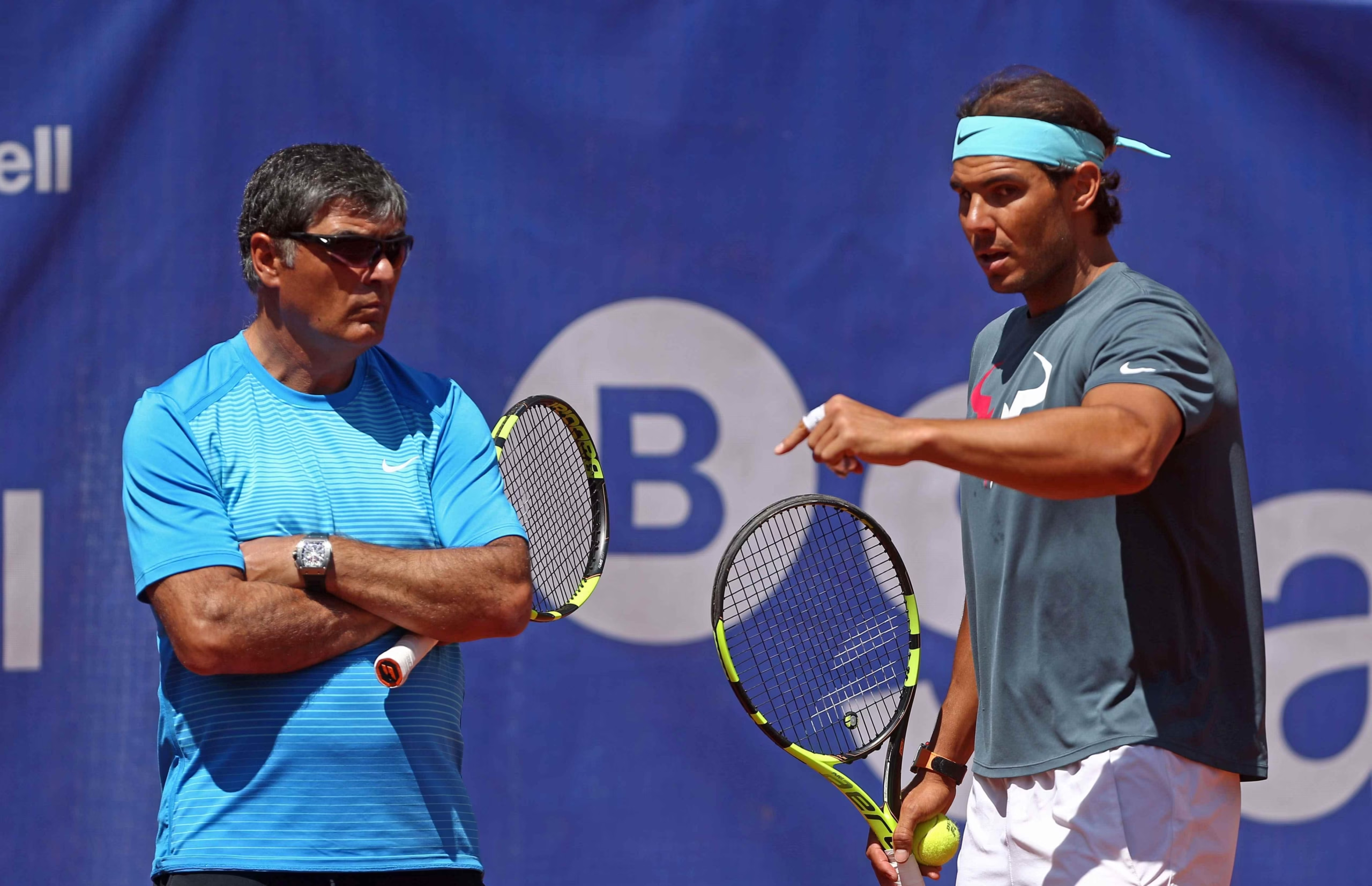
Rafael Nadal with his uncle and longtime coach Toni Nadal. Photo: David Iliff / Wikimedia Commons / CC BY 3.0
Rafael Nadal provides another legendary example of family coaching, although in his case the coach was his uncle rather than his father.
Toni Nadal began coaching Rafael when he was a young child in Mallorca and remained one of the central figures in his development for many years.
Their partnership ultimately accompanied Nadal through most of the career that established him among the greatest players in tennis history.
The Nadal story also illustrates that family coaching can evolve. Toni eventually stopped travelling full-time with Rafael, while other coaches became increasingly important members of the team.
Family involvement does not necessarily mean that the same coaching structure must remain in place forever.
Caroline Wozniacki — Piotr Wozniacki
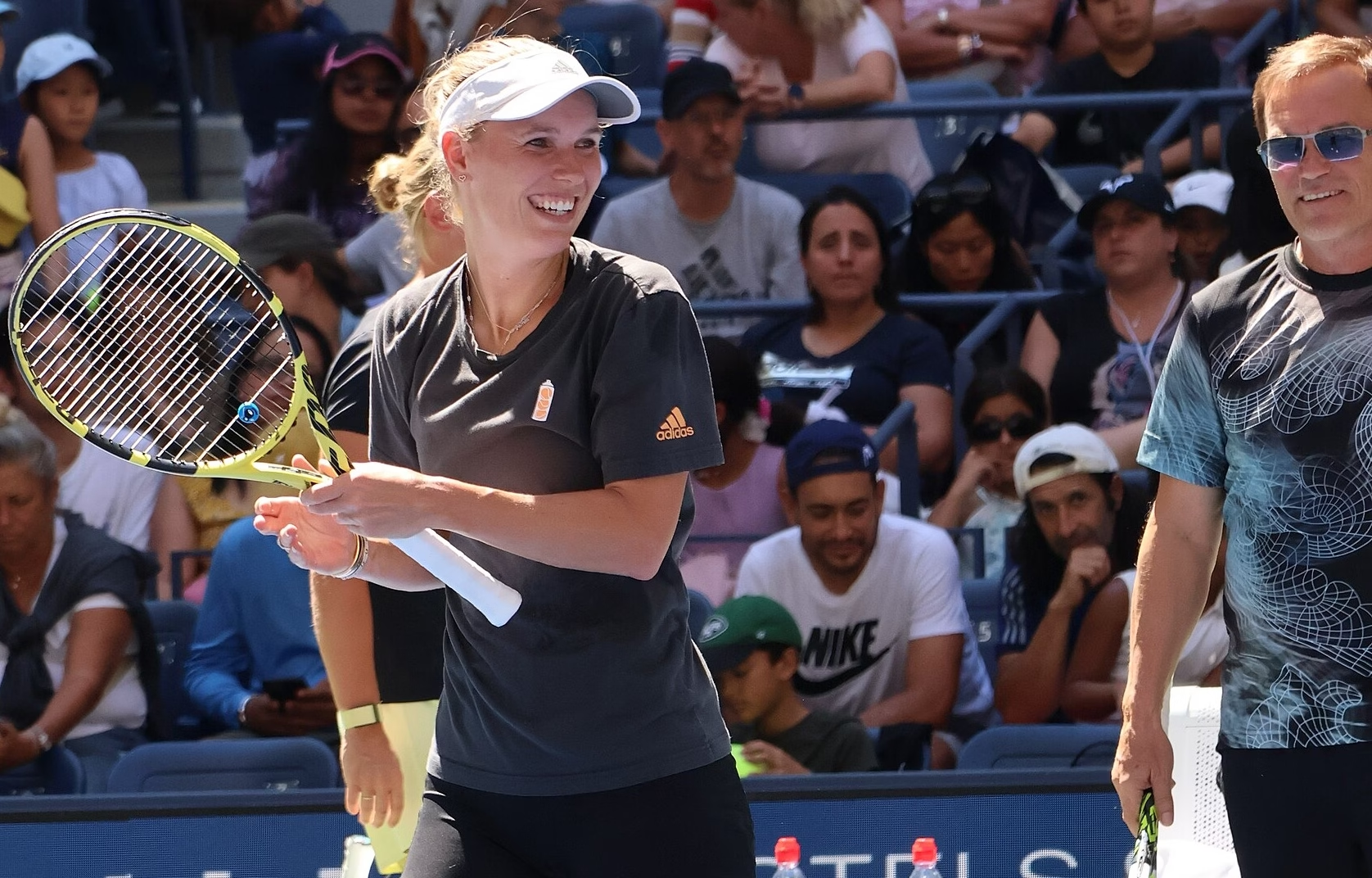
Caroline Wozniacki with her father and longtime coach Piotr Wozniacki. Photo: Hameltion / Wikimedia Commons / CC BY-SA 4.0
Caroline Wozniacki was coached throughout her career by her father, Piotr.
Unlike many tennis parents, Piotr did not come from a professional tennis background. He had been a professional football player.
The partnership nevertheless accompanied Caroline to World No.1, 30 WTA singles titles and the 2018 Australian Open championship.
Wozniacki has spoken positively about an important aspect of their relationship: her father treated her as an adult.
Their experience shows how a parent can remain an important part of the coaching structure even when other specialists and coaches are introduced around the player.
Casper Ruud — Christian Ruud
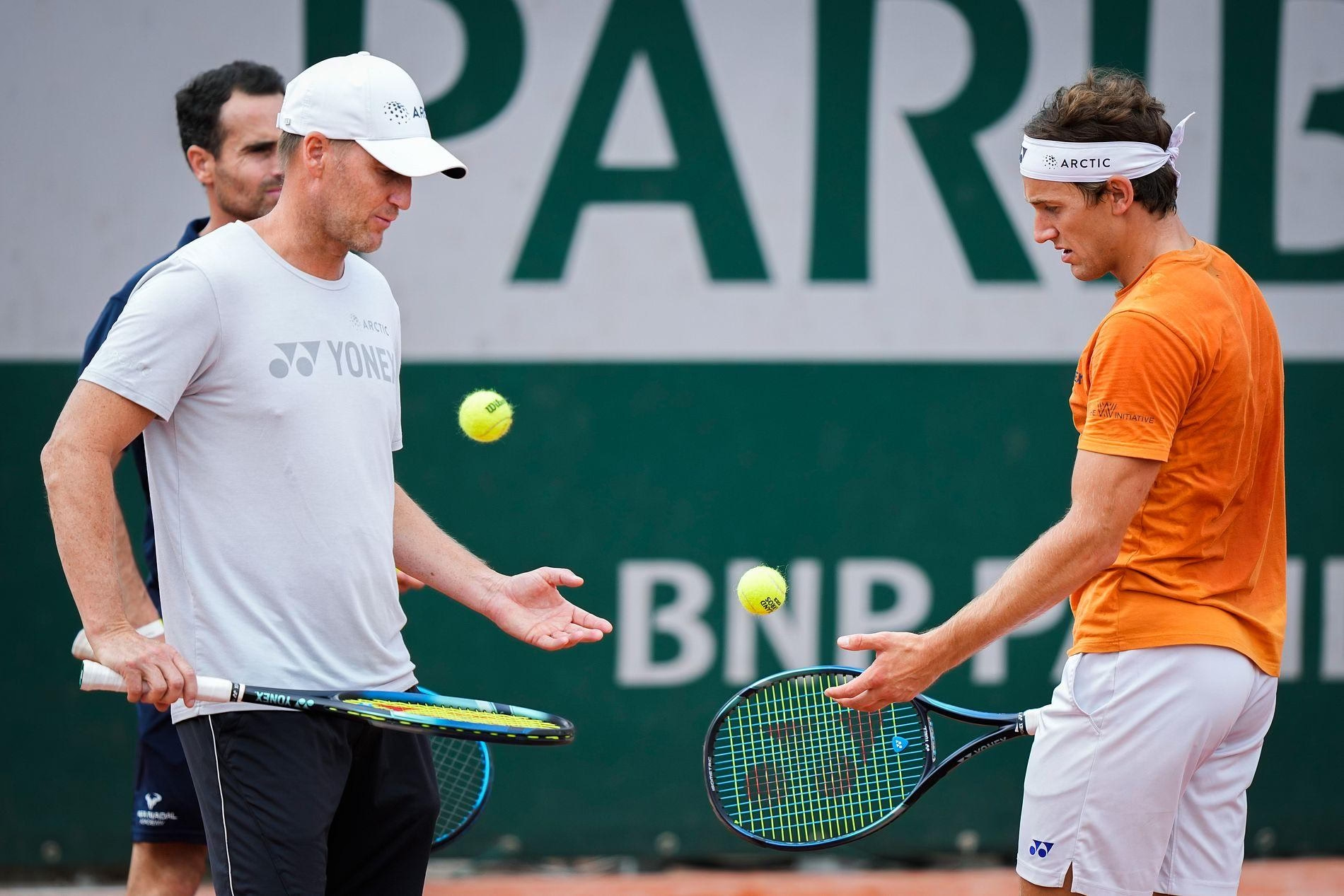
Casper Ruud training with his father and coach Christian Ruud. Photo: Hameltion / Wikimedia Commons / CC BY-SA 4.0
Casper Ruud represents a different type of parent-coach relationship because his father had already experienced professional tennis himself.
Christian Ruud reached the ATP Top 40 before becoming his son’s coach.
Casper started playing tennis with his father at four years old. Christian later stepped back for a period during Casper’s teenage years while Spanish coach Pedro Rico worked more closely with him.
When that partnership ended, Casper specifically wanted his father to return as his coach.
Christian has described himself as a coach, father and friend to Casper, while emphasizing mutual respect and communication.
The partnership helped Casper reach World No.2 and multiple Grand Slam finals.
Their experience demonstrates another possible model for junior families: a parent can step back, allow another coach to take responsibility during an important developmental period, and potentially return later.
Stefanos Tsitsipas — Apostolos Tsitsipas
Apostolos Tsitsipas played a central role in the development of his son Stefanos.
The family made major sacrifices during Stefanos’ junior years, with Apostolos leaving his job to travel with him.
The partnership accompanied Tsitsipas from junior tennis to the highest levels of the ATP Tour, including Grand Slam finals and a place among the world’s leading players.
But their relationship also illustrates one of the difficulties of combining family and professional coaching.
After years together, Stefanos eventually decided that he needed a different coaching environment and greater separation between his tennis career and his relationship with his father.
A successful parent-coach relationship during junior development does not automatically mean that it should continue throughout the player’s entire professional career.
Ben Shelton — Bryan Shelton
Ben Shelton’s pathway is particularly interesting for junior players.
His father Bryan was already highly qualified before coaching his son. He had been an ATP professional, reaching the world’s Top 60, before becoming a successful college tennis coach.
Ben played college tennis for his father at the University of Florida and won the 2022 NCAA singles championship.
After Ben turned professional, Bryan eventually became his full-time coach.
Their partnership culminated in Ben reaching the 2026 US Open final.
Bryan’s experience highlights an important distinction: being the parent does not automatically make someone qualified to coach an elite player. In this case, the parent also brought decades of professional playing and coaching experience.
Alexander Zverev — Alexander Zverev Sr.
Alexander Zverev grew up in a tennis family.
His father, Alexander Sr., was a professional player and became his coach, while his mother was also a competitive player and his older brother Mischa reached the professional tour.
Zverev has publicly emphasized the importance of separating the father-son relationship from the player-coach relationship.
That principle became particularly visible at the 2026 US Open, where Zverev reached the men’s final against another player coached by his father, Ben Shelton.
Two different tennis families had reached the same stage of one of the biggest tournaments in the world.
When Family Coaching Goes Wrong
The famous success stories should not create the impression that parental coaching is always beneficial.
Tennis also has examples where excessive parental control, pressure or inappropriate behavior seriously damaged the player-parent relationship.
Former World No.4 Jelena Dokic has publicly described physical and verbal abuse by her father, who was also heavily involved in her tennis career.
Her experience represents an extreme case, but it highlights an essential principle for junior tennis.
Performance can never justify abuse.
A parent’s first responsibility remains the wellbeing and safety of their child — not rankings, trophies or a professional tennis career.
Advantages of Having a Parent as Coach
A successful parent-coach relationship can provide several advantages.
The parent may understand the player’s personality better than anyone else and recognize when the child needs encouragement, discipline, rest or simply emotional support.
There is also continuity. Professional coaches can change, while a parent may remain involved throughout the player’s development.
Parents can also have a long-term perspective. Their decisions do not necessarily depend on immediate tournament results.
For families with limited financial resources, parental involvement may make competitive tennis more accessible during the early stages of development.
However, these advantages only remain advantages when the relationship is healthy.
Potential Risks
The biggest risk is that tennis takes over the family relationship.
If every conversation concerns training, rankings, tournaments or results, the child may gradually feel that parental approval depends on tennis performance.
Another risk is technical limitation.
A parent may be capable of teaching a beginner but eventually reach the limit of their tennis knowledge. Refusing outside expertise at that stage can slow the player’s development.
Parents can also struggle to evaluate their own child objectively.
Emotions naturally influence decisions. An independent coach may see technical, tactical or psychological issues more clearly.
Finally, adolescence can fundamentally change the relationship. A coaching arrangement that worked perfectly when a player was ten may become difficult at 14 or 16 as the young player seeks greater independence.
Signs That the Parent-Coach Relationship Is Working
A healthy arrangement usually allows the young player to express disagreement without fear.
The player should still enjoy tennis and feel comfortable communicating with the parent.
There should also be clear moments when tennis stops.
Outside expertise should be welcomed when necessary, and decisions should increasingly involve the player as they become older.
Most importantly, the parent-child relationship should remain more important than the sporting result.
When Should an Outside Coach Become Involved?
There is no universal age.
Some parents have the technical knowledge and coaching experience to remain involved at a very high level. Others may be excellent at introducing their child to tennis but need professional assistance relatively early.
An outside coach can become particularly valuable when the player needs more advanced technical development, when disagreements between parent and child become frequent, or when tennis conversations begin affecting family life.
Introducing another coach does not mean removing the parent.
The parent can remain an important member of the team while allowing a professional coach to take responsibility for tennis development.
The Ruud family provides an interesting example: Christian Ruud temporarily stepped back from daily coaching during Casper’s teenage development before later returning as his main coach.
What Junior Tennis Parents Can Learn
The stories of the Williams sisters, Rafael Nadal, Caroline Wozniacki, Casper Ruud, Stefanos Tsitsipas, Ben Shelton and Alexander Zverev show that there is no single model for successful family coaching.
Some parents remain coaches for decades.
Others eventually hand responsibility to professional coaches.
Some step away temporarily and later return.
And sometimes separating the parent and coach roles becomes necessary to protect both the player’s development and the family relationship.
The question therefore may not simply be:
“Can I coach my child?”
A better question could be:
“Am I still the right person to coach my child at this stage of their development?”
The answer can change as the player grows.
For junior tennis families, perhaps the most important principle is also the simplest:
The player may stop playing tennis one day. They will never stop being your child.
Continue Exploring Tennis Papers
Discover more junior tennis resources, including player interviews, rankings, tournaments, academies, sponsorship and career development.