Last update: October 8, 2026
The ATF Junior Rankings track players competing in Asian Tennis Federation junior tournaments, particularly across the U14 and U16 pathways.
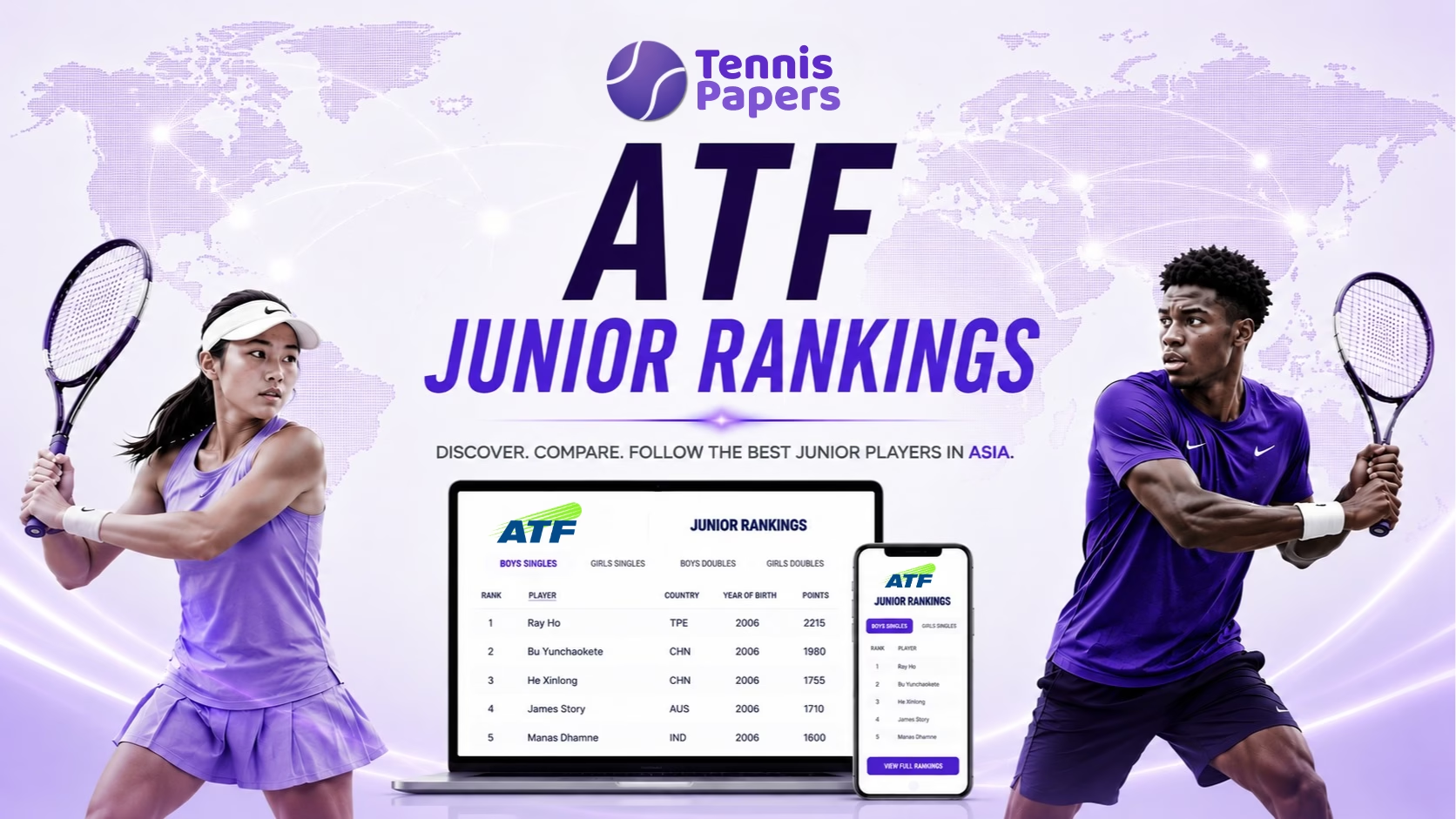
This guide is part of our complete Junior Tennis Rankings overview, covering ITF, Tennis Europe and other regional ranking systems worldwide.
Quick Navigation
ATF Rankings – Monthly Top 3
Follow the latest ATF junior rankings with our monthly Top 3 snapshot for Boys and Girls in the U14 and U16 categories. The rankings below highlight the leading junior players in Asia based on the latest available ATF rankings.
ATF Boys U16
ATF Girls U16
ATF Boys U14
ATF Girls U14
Compare the latest junior tennis leaders across ITF, Tennis Europe, COSAT, ATF and other major junior circuits.
What Are ATF Junior Rankings?
ATF rankings measure player performance in officially sanctioned Asian Tennis Federation junior tournaments and provide a regional ranking system for young players competing across Asia.
They are designed to:
Provide a continental ranking framework for junior players competing in ATF tournaments across Asia.
Give young players opportunities to compete beyond their national circuit and gain experience against players from across the region.
Help players develop competitive experience before progressing toward the ITF World Tennis Tour Juniors.
ATF and ITF rankings are separate systems. ATF rankings provide a regional development pathway, while players progressing to the ITF junior circuit compete under the separate ITF World Tennis Tour Juniors ranking system.
Age Categories in ATF
This Tennis Papers ranking guide focuses on the two main ATF junior age groups tracked here: U14 and U16.
ATF U14
The U14 pathway gives developing junior players opportunities to compete across Asia, build regional experience and progress through international competition.
ATF U16
U16 competition represents a more advanced stage of the Asian junior pathway, with players gaining experience before or alongside progression toward ITF junior tennis.
Separate rankings: U14 and U16 players are tracked within their respective competitive pathways, with tournament calendars and eligibility depending on the relevant age category.
Understanding the ATF Point System
The ATF tennis ranking is calculated using a player’s best results over a 52-week period. Points are awarded according to the level of the tournament and the player’s results.
52-Week Ranking Period
Results remain part of a player’s ranking calculation over a rolling 52-week period, with stronger tournament results contributing more points.
Combined Rankings
The ATF uses a combined ranking system in which singles results form the main ranking total, with a percentage of doubles points also contributing to the final standing.
Category A
Category A represents the highest level of ATF junior tournaments and offers the greatest number of ranking points.
Categories 1 & 2
Category 1 and Category 2 tournaments form an important part of the Asian junior circuit and provide players with regular opportunities to earn ranking points.
ATF and the Pathway to ITF
Strong performance in ATF tournaments can help Asian junior players progress toward the ITF World Tennis Tour Juniors, where they compete at a global level.
A typical development pathway can look like this:
National Events
Players begin by developing their competitive experience through national tournaments and domestic junior circuits.
ATF U14 / U16
Regional ATF competition gives players the opportunity to face leading juniors from across Asia and build international experience.
ITF Juniors
Players can then progress to the ITF World Tennis Tour Juniors and compete for international ranking points.
Professional Transition
The strongest juniors may eventually progress toward professional competition and the ATP or WTA pathway.
Strategic Development in the ATF Circuit
The ATF circuit provides young players with valuable competitive experience as they progress through the Asian junior pathway.
Cross-Border Competition
ATF tournaments give junior players opportunities to compete against different opponents from across Asia and gain international experience.
Travel & Playing Conditions
Competing in different countries helps players learn to manage travel, changing environments and varied tournament conditions.
Competitive Development
Regular tournament competition helps players develop consistency, match maturity and the experience required for higher international levels.
Development first: Players should focus on consistency, match maturity and long-term progression before transitioning to higher international levels.
Common Mistakes in ATF Ranking Progression
Moving to ITF Too Early
Progressing to the ITF junior circuit before a player is competitively ready can reduce confidence and limit valuable development opportunities at regional level.
Overplaying Regional Tournaments
Chasing too many ranking events can lead to excessive travel, fatigue and reduced training quality during important development years.
Ignoring Physical Development
Long-term athletic development, recovery and injury prevention should remain priorities alongside tournament performance.
Prioritizing Ranking Over Development
Ranking progress should reflect improving skills and match quality rather than becoming the main objective of a junior player’s development.
Balanced development matters: during the U14 and U16 stages, ranking progression should remain secondary to technical improvement, physical development, match maturity and long-term player growth.
Official ATF & Asian Junior Tennis Rankings
Check the official ATF junior rankings and explore national junior ranking systems published by tennis federations across Asia.
Official ATF Junior Rankings
View the latest U14 and U16 junior rankings published by the Asian Tennis Federation.
Official Junior Tennis Rankings by Asian Federations
Explore the official junior tennis rankings published by the national tennis federations of the ATF region across Asia.
FAQ – ATF Junior Rankings
What are the ATF Junior Rankings?
ATF Junior Rankings measure player performance in officially sanctioned Asian Tennis Federation junior tournaments. They provide a regional ranking system for young players competing across Asia.
What age categories are included in the ATF Junior Rankings?
The ATF junior competition structure includes U14 and U16 age categories, with separate competitions and ranking systems for boys and girls.
How are ATF Junior Ranking points calculated?
Players earn ranking points according to their results in eligible ATF tournaments. The number of points awarded depends on factors such as the tournament category and the round reached.
Are ATF rankings the same as ITF Junior Rankings?
No. ATF Junior Rankings are regional rankings for junior competition in Asia, while ITF Junior Rankings cover the international U18 circuit. The two ranking systems operate independently.
Can ATF tournaments help players progress to the ITF Junior Tour?
Yes. ATF tournaments give young players regional and international competitive experience that can help prepare them for progression toward the ITF World Tennis Tour Juniors.
Where can I check the official ATF Junior Rankings?
Official ATF Junior Rankings and tournament information are published by the Asian Tennis Federation. Players should use the official ATF rankings for the latest standings and updates.
Continue Exploring Tennis Papers
Discover more junior tennis resources, including player interviews, rankings, tournaments, academies, sponsorship and career development.