Last update: October 8, 2026
USTA junior rankings structure competitive junior tennis across the United States. Governed by the United States Tennis Association (USTA), the ranking system organizes players by age division and competitive results at sectional and national levels.
USTA Rankings at a Glance
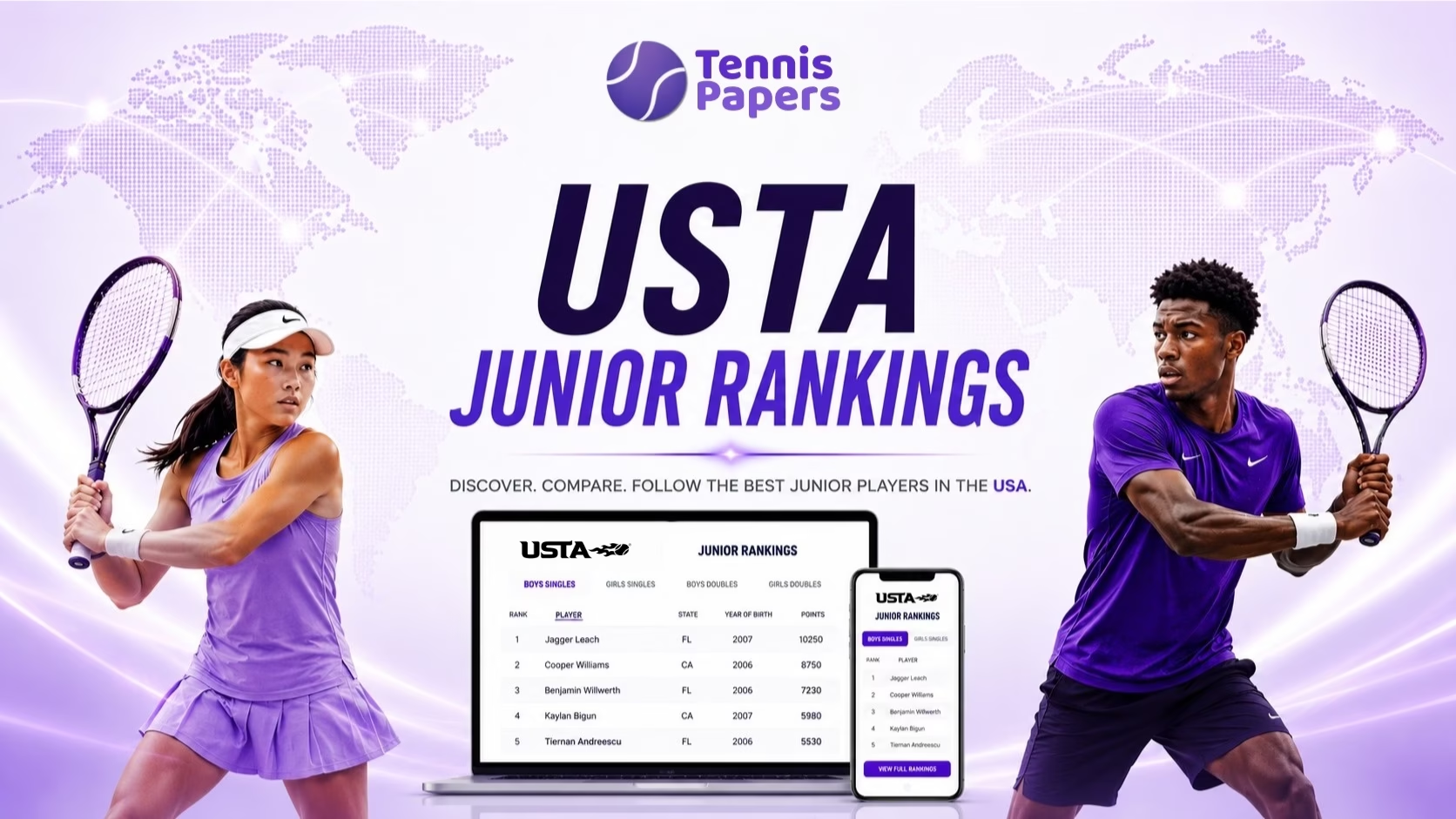
This guide is part of our complete Junior Tennis Rankings Overview, comparing ITF, continental and national systems worldwide.
View Junior Tennis Rankings Overview ❯Quick Navigation
🏆 USTA Junior Rankings – Monthly Leader
The road to the top of American tennis is fierce. Below are the current National #1 players who have dominated the USTA circuit this month across all age divisions, from the rising stars in U12 to the college-bound leaders in U18.
USTA Boys U18
USTA Girls U18
USTA Boys U16
USTA Girls U16
USTA Boys U14
USTA Girls U14
USTA Boys U12
USTA Girls U12
Compare the latest junior tennis leaders across ITF, Tennis Europe, COSAT, ATF and other major junior circuits.
What Are USTA Junior Rankings?
The USTA junior rankings are a national merit-based system that classifies players aged 18 and under across the United States. Rankings are calculated using a Points Per Round (PPR) system, where players earn points based on the level of the tournament (L1 to L7) and the round reached. These standings determine tournament acceptance and seeding for national championships.
USTA Age Divisions
USTA rankings are structured by age divisions, typically including:
- U12
- U14
- U16
- U18
Each age division maintains separate ranking lists.
How USTA Ranking Points Work
USTA ranking points are awarded based on:
- Tournament level (Level 1–Level 7 events)
- Round reached
- Draw size
- Quality of competition
USTA Junior Tournament Levels
USTA junior tournaments are organized across seven competitive levels, from intermediate events to national championships.
| Level | Competition | Typical profile |
|---|---|---|
| L1 | National Championships | Elite national competition |
| L2 | National Tournaments | High-performance national competition |
| L3 | National & Sectional Events | Advanced competitive players |
| L4 | Advanced Sectional Events | Advanced regional competition |
| L5 | Sectional Events | Intermediate to advanced players |
| L6 | Intermediate Events | Players gaining ranked tournament experience |
| L7 | Entry-Level Ranked Events | Players new to USTA ranked tournaments |
The lower the level number, the stronger and more selective the competition generally becomes.
Higher-level national tournaments award more ranking points and attract stronger players.
Sectional vs National Rankings
The USTA system includes:
- Sectional rankings (regional level within the U.S.)
- National rankings (top players across the country)
Progression often begins at sectional level before advancing to national competition.
USTA Rankings and the Pathway to ITF
Top American juniors often transition from USTA national competition to ITF junior rankings for international exposure.
The typical pathway:
USTA sectional events → USTA national tournaments → ITF Junior Tour → Professional transition
For a full explanation of global U18 rankings, see our guide to ITF Junior Rankings.
Guide to ITF Junior Rankings ❯Strategic Considerations in the USTA System
Within the USTA structure, players must consider:
- Tournament level selection
- Travel between sections
- Balancing sectional and national events
- Long-term development versus ranking accumulation
Strategic scheduling is essential to maximize ranking efficiency.
Common Mistakes in USTA Ranking Progression
- Overplaying lower-level tournaments
- Ignoring sectional competition strength
- Moving to ITF too early
- Focusing on ranking rather than development
A structured progression within the USTA system builds stronger long-term results.
Where to Check Official USTA Rankings
Official USTA rankings and tournament information are available via the United States Tennis Association website:
View USTA Junior Rankings ❯USTA Rankings Within the Global Structure
USTA Junior Rankings represent one of the most structured national junior systems in the world.
While separate from continental rankings such as Tennis Europe or COSAT, the USTA system often serves as a launching platform toward international ITF competition.
FAQ – USTA Junior Rankings
What are USTA Junior Rankings?
USTA Junior Rankings are ranking systems used to compare junior tennis players competing in USTA-sanctioned tournaments in the United States. Rankings are based on eligible tournament results and are used to track competitive performance across different age divisions.
What age divisions are used in USTA junior tennis?
USTA junior competition is organized primarily into Boys’ and Girls’ 12, 14, 16 and 18 & Under divisions. Players move through these age divisions as they develop and become eligible for older categories.
How are USTA Junior Rankings calculated?
USTA rankings are based on ranking points earned from eligible tournament results. The number of points available depends on factors such as the tournament level and the player’s result. The USTA National Standings List uses a player’s best eligible results according to the current ranking regulations.
What is the difference between a USTA ranking and UTR?
A USTA ranking reflects results and ranking points earned through eligible USTA competition, while UTR is a rating designed to estimate a player’s competitive level based on match performance. A player can therefore have both a USTA ranking and a UTR rating at the same time.
Is a USTA Junior Ranking the same as an ITF Junior Ranking?
No. USTA and ITF junior rankings are separate systems. USTA rankings primarily track junior competition within the United States, while the ITF World Tennis Tour Juniors ranking is an international system for eligible players competing in ITF junior tournaments worldwide.
Why can a USTA Junior Ranking change or drop?
A player’s ranking can change as new results are added, older results stop counting, or other players earn more ranking points. Moving into a different age division can also change the competitive context, so families should always consult the current USTA ranking rules and standings.
Continue Exploring Tennis Papers
Discover more junior tennis resources, including player interviews, rankings, tournaments, academies, sponsorship and career development.