Understand the real financial demands of junior tennis — from coaching and travel to equipment, tournaments and long-term planning.
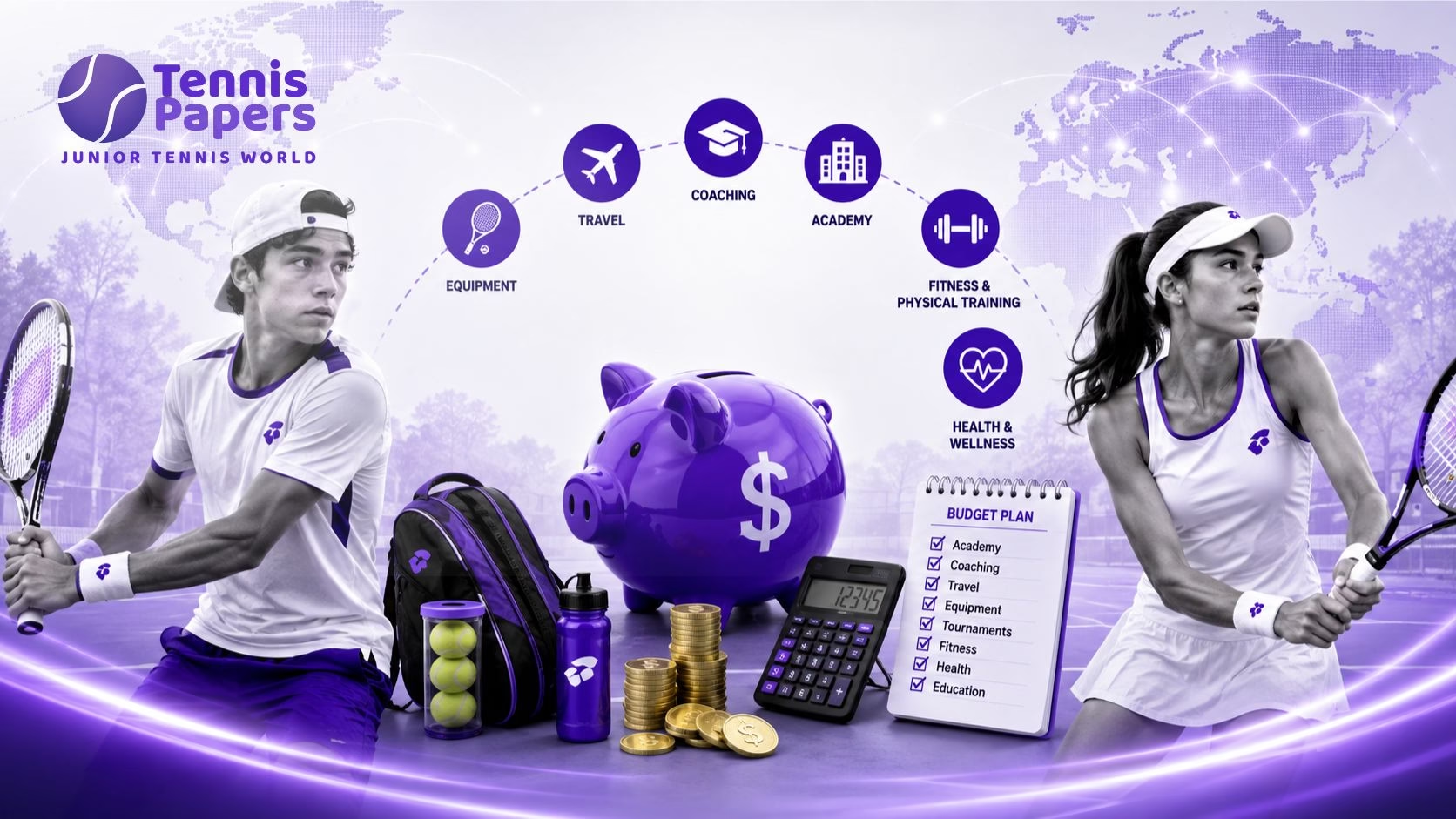
Junior tennis can require substantial financial investment as players progress from local competition to national and international events. Costs can include coaching, academies, travel, equipment, tournament fees, fitness, medical support and education.
This guide explains the main expense categories, how costs evolve as a player progresses, and the different ways families may finance a long-term tennis pathway.
Quick Navigation
Understanding the real costs of developing a future champion
Building a competitive tennis career requires far more than talent and dedication. As junior players progress from local competition to national and international levels, the financial demands can increase significantly.
Training & Coaching
Private coaching, group training, academies, fitness and long-term player development.
Tournaments
Entry fees and the growing cost of competing regularly at national and international level.
Transport & Accommodation
Flights, hotels, local transport, meals and accompanying family or coaching expenses.
Equipment & Support
Rackets, strings, shoes, clothing, physical preparation, recovery and other player needs.
Understanding the real costs of junior tennis helps families build realistic budgets, explore funding options and create a more sustainable development pathway.
Junior Tennis Costs Explained
Planning for junior tennis career costs helps families manage training, travel, competition and player support more effectively. As players progress, annual expenses can increase significantly depending on the level of competition and the structure chosen.
Coaching & Programs
Private coaching, academies, group sessions and long-term development programs can represent a major part of the annual budget.
Tournament Fees
Entry fees and repeated participation across national, regional and international circuits add recurring costs throughout the season.
Transport & Accommodation
Flights, hotels, local transport and meals often become one of the biggest expenses for players competing internationally.
Rackets, Strings & Footwear
Rackets, restringing, shoes, clothing and other equipment become recurring expenses as training volume increases.
Physiotherapy & Injury Prevention
Physical preparation, physiotherapy, recovery and medical support become increasingly important as training and competition loads rise.
Local training and competition with limited travel.
More structured coaching and broader tournament participation.
Frequent travel, international events and higher support costs.
High-performance coaching, extensive travel and a larger support team.
Annual junior tennis costs can range from around €8,000 to more than €100,000 depending on competition level, training structure, travel requirements and the amount of professional support involved.
Tennis Academy vs Private Coaching Costs
Choosing between a tennis academy and private coaching is one of the most important financial and development decisions families make. Both pathways can support high-level progression, but they differ significantly in structure, flexibility, services and annual cost.
| Comparison | Tennis Academy | Private Coaching |
|---|---|---|
| Training Structure | Daily structured program | Flexible schedule |
| Environment | Group and competitive setting | Individual or small-group setting |
| Support Services | Fitness, planning, recovery and integrated support | Depends on coach, location and budget |
| Schooling | Often integrated or coordinated | Local schooling usually maintained |
| Flexibility | More fixed schedule | Highly flexible |
| Annual Cost | €15,000–€70,000+ | €8,000–€30,000+ |
| Best Suited For | Intensive, highly structured development | Flexible long-term development |
Academies can provide coaching, sparring, fitness, recovery and scheduling within one environment, but often at a higher annual cost.
Private coaching can offer greater flexibility and individualized planning, while allowing families to build additional services around the player as needed.
The right choice depends on the player’s age, level, goals, family situation, schooling needs and budget. Both academies and private coaching can support high-level development when the environment is appropriate for the player.
Traditional funding pathways
Most junior players rely on a combination of traditional funding sources during the early and intermediate stages of their development.
Family Support
For many players, family funding remains the primary financial source during the early stages of a junior tennis career.
National Federation Support
Federations may provide grants, coaching assistance, tournament support or travel funding, often for higher-ranked or priority players.
Equipment Partnerships
Racket, apparel and equipment brands may provide products, discounts or partial support. Full financial sponsorship is generally less common at junior level.
Families often remain the financial foundation of a junior tennis pathway, while federation support and equipment partnerships can gradually reduce part of the overall cost as the player progresses.
Tips for parents
Careful planning can help families control expenses while keeping long-term player development the priority.
Set a Realistic Annual Budget
Plan training, tournament, travel, equipment and recovery costs before building the season.
Prioritize Development Over Travel
More tournaments do not automatically mean better development. Choose events that serve a clear competitive purpose.
Explore Available Support
Check federation programs, clubs, academies, scholarships and local funding opportunities.
Plan for Hidden Costs
Include accommodation, meals, transport, stringing, medical care and other expenses beyond tournament entry fees.
Protect the Long-Term Pathway
Build a sustainable budget that supports both tennis development and education without creating unnecessary financial pressure.
The most expensive pathway is not necessarily the best one. A sustainable junior tennis budget should prioritize quality coaching, appropriate competition and long-term player development.
Planning a Sustainable Junior Tennis Pathway
Building a sustainable junior tennis career requires more than simply increasing the budget. Families need to balance development, competition and financial resources over several years.
Plan Long Term
Consider how training, competition and travel costs may evolve as the player progresses through different stages.
Adapt the Budget
Review spending regularly and adjust priorities according to the player’s development, competition level and available support.
Keep Development First
Financial decisions should support the player’s long-term progression rather than create pressure to chase rankings or results too early.
Successful junior development depends on how resources are used, not simply how much is spent. Good planning helps families invest where it matters most.
FAQ – Junior Tennis Costs
How much does junior tennis cost per year?
Junior tennis costs vary widely depending on the player’s level, coaching structure, tournament schedule, and travel requirements. A developing competitive player may require several thousand euros per year, while international and elite pathways can cost tens of thousands of euros annually.
What are the biggest expenses in junior tennis?
The main expenses usually include coaching and training, academy fees, tournament entry fees, travel and accommodation, tennis equipment, racket stringing, physical preparation, recovery, and medical support.
How much does an international junior tennis career cost?
An international schedule can become significantly more expensive because players must regularly travel to tournaments, sometimes with a parent or coach. Accommodation, flights, ground transportation, meals, coaching, and tournament expenses can push annual budgets well beyond those of national-level players.
Is a tennis academy more expensive than private coaching?
Not necessarily. Tennis academies may have higher fixed fees but can combine coaching, fitness, facilities, sparring partners, and sometimes education within one program. Private coaching offers greater flexibility, but costs can increase considerably when frequent individual sessions, fitness training, court fees, and travel coaching are added.
Do tennis federations help pay junior players’ expenses?
Some national and regional tennis federations provide financial assistance, training programs, tournament support, wild cards, or travel assistance to selected junior players. The level of support varies significantly between countries, federations, age groups, and player levels.
Can junior tennis players get sponsorship?
Yes, but junior sponsorship often begins with equipment, apparel, rackets, strings, or discounts rather than direct financial support. Strong competitive results, long-term potential, visibility, professionalism, and relationships with brands can influence sponsorship opportunities.
How can families reduce junior tennis costs?
Families can control costs by creating an annual budget, selecting tournaments strategically, limiting unnecessary travel, combining private and group training, exploring federation or club support, applying for scholarships, and seeking appropriate sponsorship opportunities.
Does spending more money guarantee better tennis development?
No. A larger budget can provide access to additional coaching, tournaments, and resources, but spending more does not guarantee better results. The quality of coaching, appropriate competition, consistent training, player motivation, physical development, and long-term planning are more important than simply maximizing expenditure.
Continue Exploring Tennis Papers
Discover more junior tennis resources, including player interviews, rankings, tournaments, academies, sponsorship and career development.