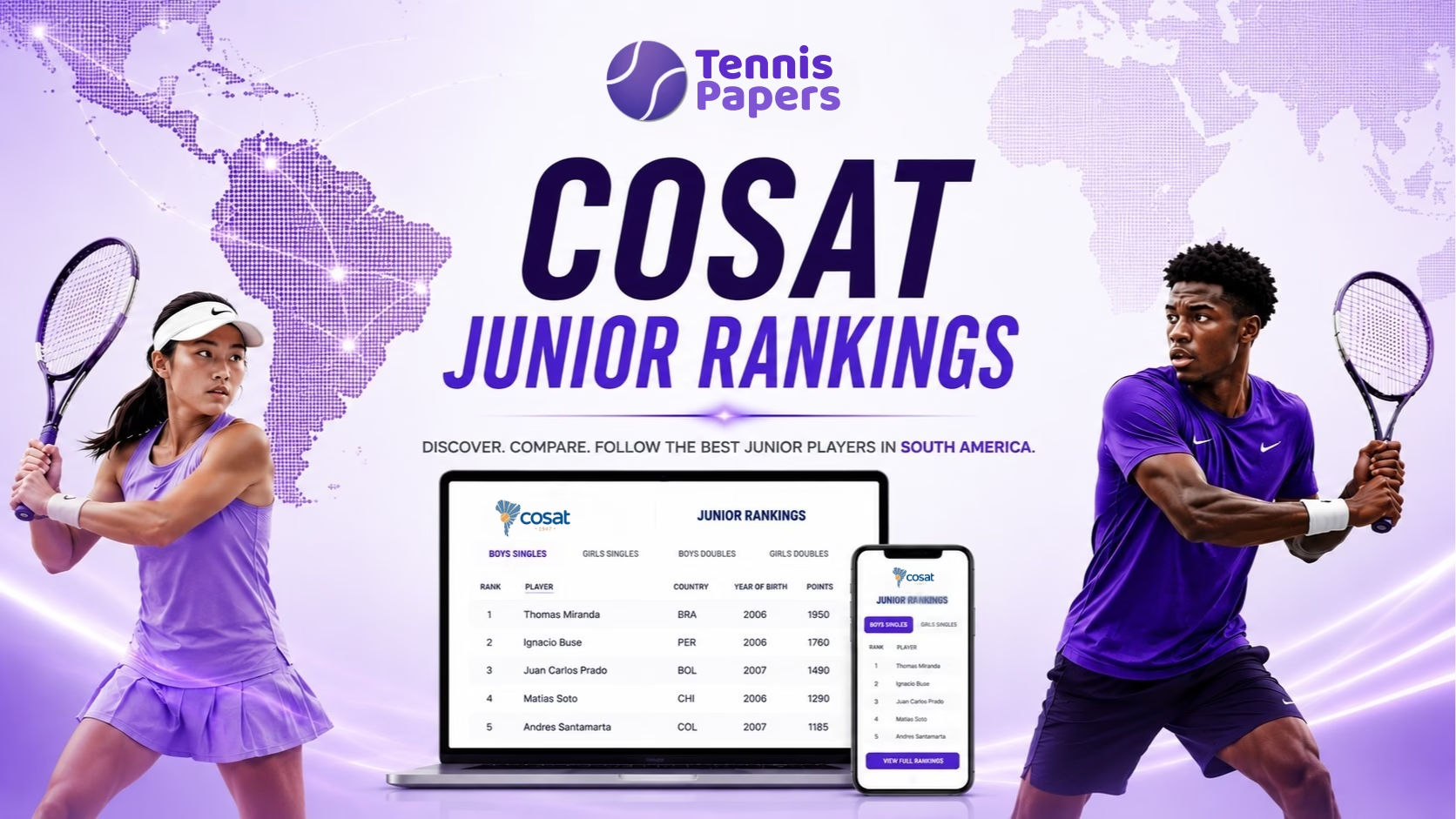
The COSAT junior rankings define the competitive landscape for young tennis talents across South America. Providing a clear pathway to international success, the COSAT tennis ranking system tracks the best U14 and U16 players competing in the prestigious Gira COSAT. Whether you are a player aiming for the European tour or a fan following the region’s rising stars, our updated guide provides the most recent standings and point breakdowns.
This guide is part of our complete Junior Tennis Rankings overview , covering ITF, Tennis Europe and regional ranking systems worldwide.
Quick Navigation
🏆 COSAT Junior Rankings – Monthly Top 3
Track the latest COSAT junior rankings with our monthly snapshot of the Top 3 players in each U14 and U16 category. Updated every month, this overview highlights South America’s highest-ranked junior talents.
COSAT Boys U16
COSAT Girls U16
COSAT Boys U14
COSAT Girls U14
Compare the latest junior tennis leaders across ITF, Tennis Europe, COSAT, ATF and other major junior circuits.
What Are COSAT Junior Rankings?
Official South American Ranking
COSAT Junior Rankings are the official ranking system for South American junior players and serve as the main regional pathway towards the ITF Junior World Tennis Tour.
For U14 & U16 Players
Rankings are calculated separately for boys and girls in the Under-14 and Under-16 categories.
Performance Based
Players earn ranking points through official COSAT tournaments organised throughout South America.
The COSAT ranking system is the main regional pathway for South American junior players before progressing to the ITF Junior World Tennis Tour.
Age Categories in COSAT
COSAT competitions are primarily structured around two age categories, each with its own ranking list and tournament calendar across South America.
Under 14
The U14 circuit introduces young players to high-level regional competition and helps them build international experience.
Under 16
The U16 circuit prepares advanced junior players for stronger international competition and progression toward the ITF Junior Tour.
How COSAT Ranking Points Work – Gira COSAT
Understanding the points system is essential for any player competing on the South American circuit. The Gira COSAT operates on a specific grading system where the number of points awarded depends on the tournament’s category (Grade 1 to Grade 4).
These points are crucial as they determine the year-end rankings and qualify the top-performing players for the prestigious COSAT Masters and the European tours organized in partnership with the ITF and GSDF.
Tournament Grades & Points Allocation
Not all tournaments are equal. The number of points awarded depends on the “Grade” of the event:
Grade 1
The highest-level COSAT tournaments, offering the most ranking points and attracting leading South American junior players.
Grade 2
Important regional tournaments for players seeking strong results and progress toward the upper levels of the COSAT rankings.
Grade 3
Competitive development tournaments that allow players to build experience and accumulate regional ranking points.
Grade 4
Entry-level international tournaments designed for players beginning their progression on the COSAT Junior Tour.
COSAT Points Allocation (Singles)
The following table breaks down the points awarded for each round based on the tournament grade for both U14 and U16 categories:
| Tournament Grade | Winner | Runner-up | Semi-finalist | Quarter-finalist | Round of 16 |
|---|---|---|---|---|---|
| G1 Grade 1 | 150 | 110 | 80 | 50 | 30 |
| G2 Grade 2 | 80 | 60 | 45 | 30 | 15 |
| G3 Grade 3 | 40 | 30 | 20 | 15 | 8 |
| G4 Grade 4 | 20 | 15 | 10 | 7 | 3 |
Points are awarded according to the tournament grade and the round reached. Grade 1 events offer the highest number of ranking points.
Key Ranking Rules to Remember:
- Best Results: Much like the ITF circuit, the COSAT ranking is calculated based on a player’s best performance over a rolling 52-week period.
- Regional Eligibility: While international players can often participate in these tournaments, the official COSAT ranking is specifically reserved for players representing South American nations.
- Transition to ITF: Success in Grade 1 tournaments is a major milestone for South American juniors looking to transition toward the ITF World Tennis Tour Juniors (U18).
The Race for the European Tour
One unique feature of the Gira COSAT is the “European Tour Qualification.” The top-ranked players in the U14 and U16 categories at the end of the main circuit earn a spot on the COSAT team to compete in Tennis Europe events during the summer. This makes every match in the early months of the year crucial for those dreaming of international exposure.
The Gira COSAT: Pathway to the ITF World Tennis Tour Juniors
Success on the South American junior circuit is the ultimate springboard for young talents. High rankings in the U14 and U16 COSAT categories are often the first step toward earning a spot on the ITF World Tennis Tour Juniors, where players begin competing at the global U18 level.
The Proven South American Performance Pathway:
National Level
Build a strong foundation through local and national tournaments.
COSAT U14 / U16
Gain international experience and compete against the best juniors across South America.
ITF Junior Tour
Progress to the U18 international circuit and begin building a world ranking.
Professional Transition
Use junior success as a pathway toward ATP or WTA competition.
Pro Tip: Many top-tier COSAT players use their year-end rankings to secure wildcards or entry into prestigious ITF Grade 1 and J200 events, bypassing lower-level qualifiers.
Strategic Development in the COSAT Circuit
COSAT competition helps players develop.
International Experience
Compete regularly against the strongest junior players across South America before stepping onto the global stage.
Different Playing Conditions
Develop adaptability by competing on different surfaces, climates and playing environments.
Competitive Maturity
Build confidence and consistency before entering the ITF Junior World Tennis Tour.
Success in the COSAT circuit is built on quality performances rather than playing the highest number of tournaments. Consistent results against the region’s strongest juniors are far more valuable than tournament volume.
Common Mistakes in COSAT Ranking Progression
Entering ITF Events Too Early
Moving to the ITF Junior Tour before establishing a strong regional base can slow long-term progression.
Ignoring Physical Development
Technical progress should be supported by strength, mobility, recovery and physical preparation.
Overplaying Regional Tournaments
Playing too many events can reduce training quality, recovery time and the value of each competition block.
Underestimating Competition Level
COSAT events can be highly competitive, especially at the upper grades and later rounds.
Sustainable regional progression often produces stronger long-term international results.
Official South American Junior Tennis Rankings
Explore the official junior tennis rankings published by the national tennis federations across the COSAT region in South America.
COSAT REGIONAL RANKING Official COSAT Rankings — U14 & U16Final Thoughts
The COSAT Junior Circuit provides a structured regional pathway for young South American players through U14 and U16 competition, official rankings and high-level international match experience.
For players, parents and coaches, understanding how COSAT rankings connect national competition with the ITF Junior World Tennis Tour can help support smarter and more sustainable long-term development.
FAQ – COSAT junior ranking
What is COSAT in tennis?
COSAT (Confederación Sudamericana de Tenis) is the regional governing body for tennis in South America. It organizes junior competition, publishes regional rankings and provides an important pathway toward higher-level international tennis.
How do COSAT Junior Rankings work?
COSAT rankings are based on ranking points earned in eligible regional tournaments. Players accumulate points according to their tournament results and the level of the competition.
What age categories are included in the COSAT Junior Circuit?
The COSAT Junior Circuit includes U14 and U16 competition. Each age category has its own tournament structure and ranking system for boys and girls.
How are COSAT ranking points calculated?
Players receive ranking points according to factors such as tournament level and the round reached. Higher-level events generally offer more ranking points than lower-level tournaments.
Who can compete in COSAT tournaments?
COSAT tournaments primarily serve junior players competing through South American national federations. Eligibility can vary by tournament, so players should always check the official regulations for the specific event.
What is the difference between COSAT and the ITF Junior Tour?
COSAT is the regional junior circuit for South America, while the ITF World Tennis Tour Juniors is the international junior circuit. COSAT competition can help players gain regional experience before progressing toward higher-level ITF junior events.
Why are COSAT Junior Rankings important?
COSAT rankings help track competitive progress across the South American junior circuit. They can also support access to stronger regional competition and provide useful experience before players move toward higher international levels.
Where can I find the official COSAT Junior Rankings?
Official COSAT junior rankings are published through COSAT. National tennis federations across South America may also publish their own domestic junior rankings and player information.
Which countries belong to COSAT?
COSAT brings together the national tennis federations of Argentina, Bolivia, Brazil, Chile, Colombia, Ecuador, Paraguay, Peru, Uruguay and Venezuela.
Can international players earn COSAT ranking points?
Eligibility depends on the rules of the specific tournament and ranking system. Players should check the official COSAT regulations before entering an event or assuming that results will count toward the COSAT ranking.
Continue Exploring Tennis Papers
Discover more junior tennis resources, including player interviews, rankings, tournaments, academies, sponsorship and career development.