What do brands really look for in a young tennis player?
When should families start approaching sponsors?
And what can a player offer beyond results and a large social media following?
In this Karin Zemach interview, the founder of FORTYTWOLOVE explains how brands approach tennis partnerships and what that means for junior players and their parents.
“We connect brands with the right tennis players.”
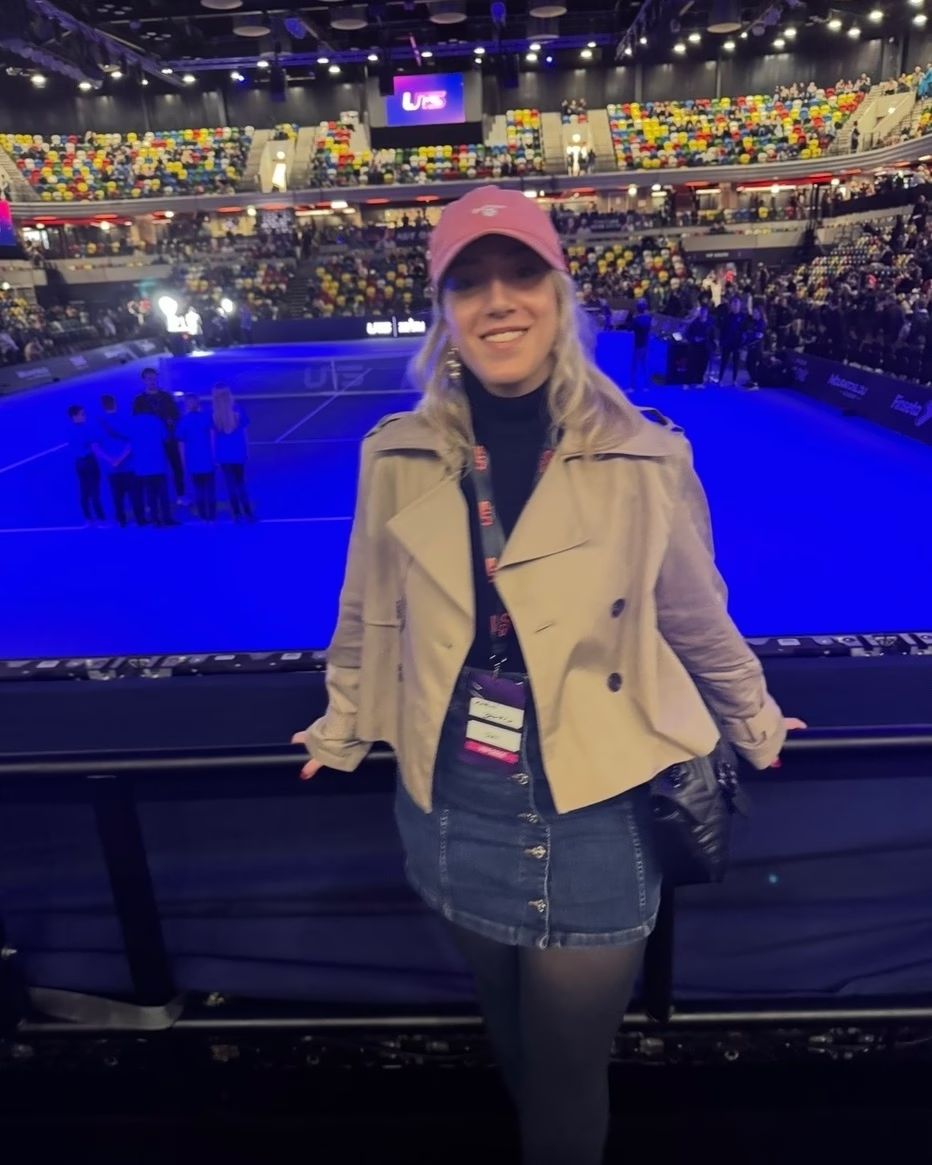
Karin Zemach is the founder of FORTYTWOLOVE, a tennis strategy and brand partnerships consultancy that works from the brand side. A former commercial lawyer, she helps brands find their place in tennis through the right players, tournaments and people.
From realistic first requests to choosing the right companies and writing an introductory email, she shares practical starting points for families seeking support.

Karin Zemach Interview: Understanding the Brand Side of Tennis
My story with tennis started with a red racquet. I was about ten when I saw a shiny red Prince racquet in a shop and decided right there to start playing. I found a club near home and watched tennis on Eurosport every day. What fascinated me most was everything around the game: why a brand chose one player, why a logo sat on one shirt and not another. The business side of tennis.
I went on to build a career as a commercial lawyer and put that dream aside. Over time I realised the life I want is with founders: creating, caring about what we build and making an impact. So about a year ago, I founded FORTYTWOLOVE.
FORTYTWOLOVE connects brands with the tennis world through players, tournaments and the people around them, in the way that fits each brand. That’s why I always start by understanding the brand.
A player’s agent starts from the player. I come in from the other end, through the brand. The best partnerships happen where the two meet.
It all depends on what the company wants to achieve, and that can be many different things: reaching a new audience, entering a new market, telling a story about its values, showing its product in real use, and much more.
What makes one player a better fit starts with shared values. A brand is like a tennis player, with a personality and people behind it, and it wants to work with people it genuinely likes. Alongside that, the player brings real business value to what the company is looking for. The two go together. Sometimes the right fit matters even more than results.
There is no single right age. It makes sense to start when there is something real to share: commitment to the sport, a clear plan and a player who enjoys what they do.
For a younger junior, the realistic first step is product support or a discount from a brand the family already uses. A leading international junior can start talking about a small, defined project with a brand. A player starting on the pro tour is ready for a broader partnership, built on shared goals over time.
Presence is the way a player carries themselves on and off the court: how they compete, how they speak, how they treat people, and the joy they bring to the game. With younger players, honesty, joy and seriousness are often easier to see, and that is exactly what a brand can connect with.
Brands that come in early, before the big results, often stay for the long run. They believed in the person first, and that trust grows with the player.
Each one is a step in a relationship. A discount or free equipment usually comes first: the brand gets to know the player through real use of its product. Financial support and a broader partnership come later, when there is trust, a shared story and a clear business goal for the brand.
A young player can realistically ask for product support, or for help with one specific thing, such as travel costs for a few specific tournaments. Before financial support, a brand usually wants to see commitment, a good relationship with the family and team, and a fit that makes sense for its own goals.
Start with what the player already uses and loves, and with the brands around them: in their town, their club and their family’s world. A real connection to a product is the strongest starting point.
Smaller tennis brands, local businesses and companies outside sport are all worth considering. They are often more open, more personal and more willing to take an early step. What matters is that the brand’s values and goals make sense alongside who the player is.
A lot. A player can offer a real story, genuine use of the product, and a community around them: their club, coaches, teammates and local tournaments. For many brands, especially smaller ones, that closeness is worth more than a big audience.
The family can show this simply: what the player is working toward, which tournaments are coming up, where the brand would be seen, and how they would share the journey together. Honesty and consistency build trust from the first message.
In a smaller company, the founder or marketing lead is often the right person. In a bigger one, look for the person who handles partnerships or sponsorship. For a minor, a parent should send the message, with the player’s own voice included, for example a few lines about why they love the brand.
A good first email is short. Who the player is, why this brand in particular, what they are working toward this season, and one simple ask. It should finish by inviting a conversation and showing curiosity about the brand. That is what makes me want to learn more.
First, write down the player’s story in a few lines: who they are, what they love about tennis and where they want to go this year. Second, make a short list of brands that genuinely fit, starting with products the player already uses and companies close to home. Third, reach out personally, one brand at a time, with a short and honest message.
A realistic first request is product support, or help with travel costs for a few specific tournaments. Starting small builds trust, and trust is what lets a relationship grow.
A common misconception is that the higher a player’s results, the more the deals will come automatically. Results help, but a brand is also looking for someone who connects with its audience, can help tell its story and brings real business value.
To a talented young player without support yet: keep enjoying the game and stay true to who you are. The right partner is looking for exactly that. When it comes, it should feel like finding a best friend, someone who helps you both grow.
My own agency is young. I founded it only a year ago, and life has already surprised me in the best ways. So dream big, and then do the work. It really happens 🎾
Karin, thank you for sharing your experience, honest perspectives, and valuable insights with Tennis Papers!
We wish you continued success in supporting young players, creating opportunities, and helping make tennis more accessible to everyone!
Key Takeaways for Junior Players & Parents
- Understand what the brand wants to achieve. Companies consider shared values, audience connections and business goals alongside a player’s results.
- Start with a realistic request. Product support or a discount is often a first step for younger juniors. Help with specific tournament travel costs can also be a focused request.
- Approach brands that genuinely fit the player. Start with products the player already uses and enjoys, local businesses and companies connected to the family or club.
- Recognize the value of your tennis community. A large social media following is not the only asset. Relationships with coaches, teammates, clubs and local tournaments can also be valuable to a brand.
- Show who the player is beyond rankings. Commitment, personality, behaviour on and off the court, and enjoyment of the game help brands understand the person they could support.
- Keep the first approach short and personal. Explain who the player is, why this particular brand fits, the season’s goals and one specific request. For a minor, a parent should send the message while including the player’s own voice.
- Build trust through honesty and consistency. Explain where the brand would be seen and how the player and family could share the journey. Broader partnerships develop through trust and shared goals over time.
About Karin Zemach & FORTYTWOLOVE

Karin Zemach
Karin Zemach is the founder of FORTYTWOLOVE, a tennis strategy and brand partnerships consultancy that works from the brand side. A former commercial lawyer, she helps brands find their place in tennis through the right players, tournaments and people.
Tennis Papers thanks Karin Zemach for sharing her perspective on tennis sponsorship and offering practical guidance to junior players and their families.