Last update: August 23, 2026
The World Tennis Number (WTN) is a global tennis rating system designed to measure a player’s current playing level on a scale from 40 to 1. Used by juniors, adults, recreational players, and professionals, WTN provides separate ratings for singles and doubles and allows players to compare their level across countries and competition systems.
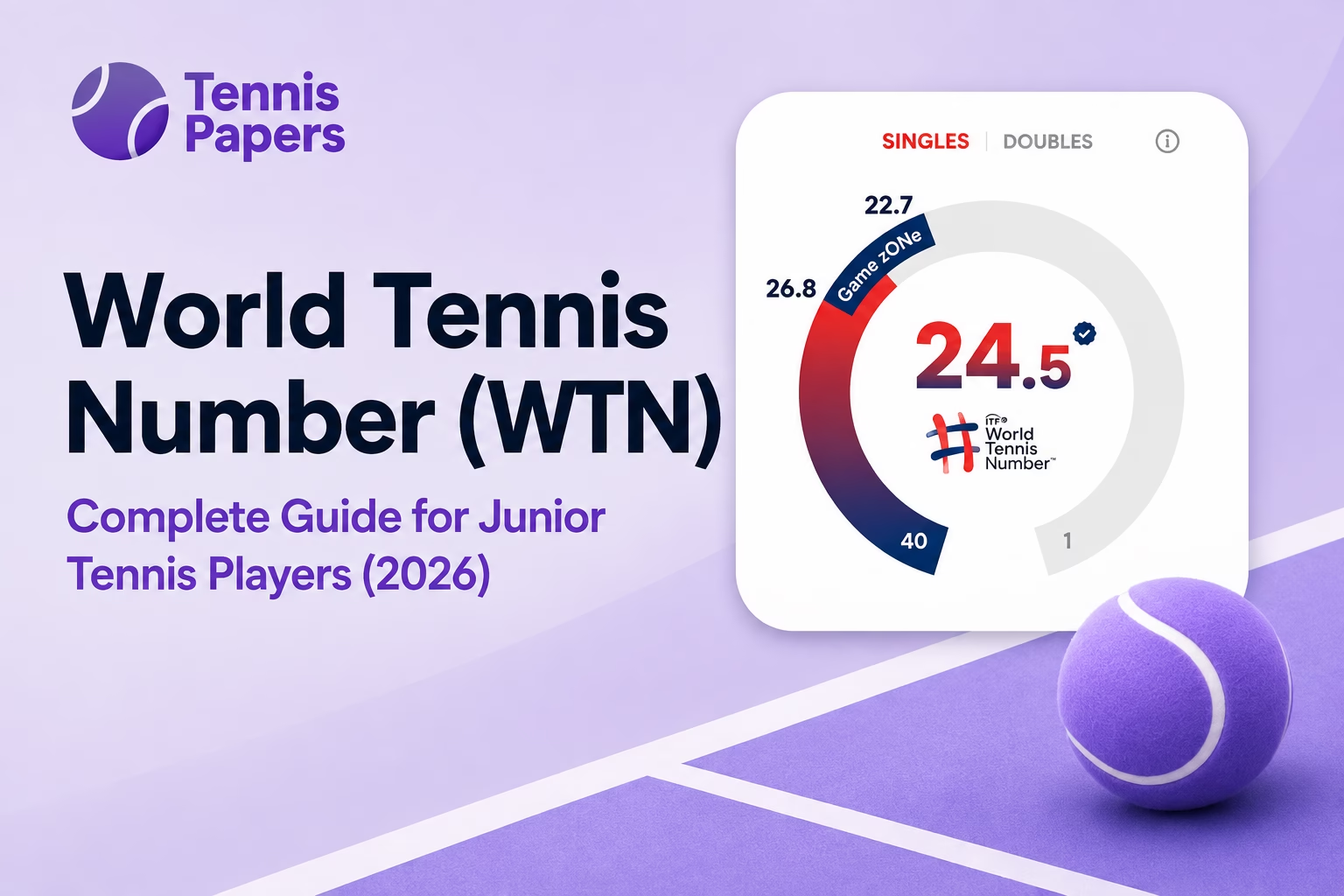
For junior players and their families, WTN can help track development, identify competitive opponents, and provide a common reference point across national and international tennis. It is also used within parts of the ITF competition pathway.
Quick Navigation
What Is the World Tennis Number (WTN)?
The World Tennis Number (WTN) is a global tennis rating system designed to measure a player’s current playing level. It can be used by players of all ages and abilities, from beginners and junior competitors to professional players.
Unlike a traditional tennis ranking, which shows where a player stands relative to other competitors within a particular ranking system, WTN is a rating focused on playing ability and match performance.
Every player is measured on the same global scale from 40 to 1. The beginner end of the scale is closer to 40, while the world’s best professional players are closer to 1. Players have separate World Tennis Numbers for singles and doubles.
Measures a player’s current playing level.
- Global scale from 40 to 1
- Based on match performance
- Comparable across players worldwide
- Separate ratings for singles and doubles
Shows a player’s position relative to other players within a particular ranking system.
- Usually based on tournament results or ranking points
- Depends on the specific ranking system
- May be linked to a tour, age group, or territory
- Shows relative position rather than playing level
Understanding the WTN Scale
The World Tennis Number scale runs from 40 to 1. Players closer to 40 are nearer the beginner end of the scale, while players closer to 1 are at the highest competitive level.
This means that a lower WTN represents a higher playing level. For example, a player with a WTN of 8 is rated at a higher level than a player with a WTN of 15.
Lower is better. A WTN of 10 represents a higher playing level than a WTN of 20. The number measures playing level rather than a player’s position in a ranking list.
How Does the World Tennis Number Work?
The World Tennis Number is calculated from match results and performance data. Rather than looking only at wins and losses, the system evaluates the context of each match to estimate a player’s current level.
As new results are added, WTN can change to reflect a player’s recent performances and development.
Your match results contribute to the calculation of your World Tennis Number.
The system considers the relative playing level of the opponents involved in a match.
Match scores provide additional information about how closely contested a match was and contribute to the rating calculation.
WTN uses recent match history to help the rating reflect a player’s current playing level.
The system also assigns a confidence level based on the amount and quality of match data available for the player.
In August 2026, enhancements to the World Tennis Number algorithm went live. The updated system includes game-level scoring, a rolling three-year ratings window, improved modelling of player development, and a gradual adjustment mechanism for periods of inactivity. Learn more about the 2026 WTN algorithm enhancements .
How Do You Get Your First WTN?
You do not necessarily need to start from zero to get a World Tennis Number. Many players already have a WTN based on match data submitted by national associations, international competitions, or other participating tennis systems.
For junior players, the first step is therefore to check whether a WTN profile already exists before creating a new account or contacting the relevant tennis association.
Players can search for their profile and learn more about their rating through the official World Tennis Number website .
Check the World Tennis Number player search or your national tennis association platform to see whether a profile and rating already exist.
If required, create or claim your account through the appropriate platform and connect your tennis activity to your profile.
As eligible match results are added, the algorithm gains more information about your playing level and your WTN becomes more reliable.
A verified WTN means the system has a sufficiently high level of confidence in the accuracy of the rating. Playing more recent matches helps increase that confidence.
As a guide, the official WTN FAQ indicates that a player with little or no previous results history may reach a verified rating by completing 15 sets against opponents in their Game zONe within a five-week period. This is guidance rather than a universal requirement for receiving an initial WTN.
WTN for Junior Tennis Players
For junior tennis players, the World Tennis Number provides a common way to understand playing level beyond age categories, national rankings, or individual tournament circuits. It can therefore become a useful reference as players progress through the junior tennis pathway and begin competing in international junior tournaments .
As junior players compete and more match results become available, WTN can provide players, parents, coaches, and tournament organizers with an additional reference point for evaluating competitive level.
WTN can help juniors follow changes in their playing level over time as new match results are added.
Players with similar WTN levels can be identified as potentially competitive opponents, helping support more balanced matches.
Because WTN uses a common global scale, it can provide a useful reference when comparing players from different countries and tennis systems.
WTN can be used within competitive tennis to help assess playing level, support match-making, and contribute to certain competition processes.
WTN should be viewed as a development tool, not a target. For junior players, long-term improvement, appropriate competition, coaching, and enjoyment of the game remain more important than chasing a particular number.
WTN vs UTR: What’s the Difference?
World Tennis Number (WTN) and UTR are both global rating systems designed to measure a player’s tennis level rather than simply showing their position in a traditional ranking.
However, they are separate systems with different scales, algorithms, ecosystems, and uses. A junior player can therefore have both a WTN and a UTR Rating at the same time.
| Feature | WTN | UTR |
|---|---|---|
| Full Name | World Tennis Number | UTR Rating |
| Type | Playing-level rating | Playing-level rating |
| Scale | 40 → 1 | 1.00 → 16.50 |
| Direction | Lower is better | Higher is better |
| Singles & Doubles | Separate ratings | Singles and doubles ratings |
| Junior Players | Yes | Yes |
| Global Scale | Yes | Yes |
| Ecosystem | International federation and participating national associations | UTR Sports |
| Junior Pathway | Used within parts of the ITF World Tennis Tour Juniors acceptance process | Used across UTR junior events and the wider UTR Sports ecosystem |
With World Tennis Number, a lower number represents a higher playing level. The world’s strongest professional players are at the 1 end of the scale.
UTR works in the opposite direction: a higher rating represents a higher playing level. Players of all ages and levels use the same global scale.
Yes, to some extent. WTN and UTR are two global rating systems that aim to measure tennis playing level, so there is naturally some overlap between them. However, junior players do not necessarily have to choose one or the other.
The main difference is the ecosystem in which each rating operates. WTN has an institutional role within international tennis and is increasingly integrated into official competition pathways. Since January 2026, a proportion of direct acceptances into qualifying and main-draw singles at J30 and J60 ITF World Tennis Tour Juniors events can be awarded based on WTN. WTN is also used for acceptance in the 16&U WTN Regional Reserved Programme.
UTR operates within the independent UTR Sports ecosystem, which includes junior circuits, college circuits, level-based events, and professional competition.
Rather than asking which system will ultimately “win”, junior players and families should understand where each rating is used and which one matters for the pathway they are pursuing. A player can have both a WTN and a UTR, and the importance of each may vary depending on the competitions and opportunities involved.
WTN and UTR can coexist in a junior player’s pathway. WTN has an increasingly important role within the official international junior competition pathway, while UTR remains a major independent rating and competition ecosystem. For players and families, the most relevant rating depends on where and how the player competes.
Singles WTN vs Doubles WTN
Players can have separate World Tennis Numbers for singles and doubles. Although both use the same 40-to-1 scale, they are calculated independently and reflect performance in each discipline.
This means that a junior player’s singles WTN may be very different from their doubles WTN, depending on their match history and results in each format.
Your singles WTN reflects your playing level based on eligible singles match data.
Your doubles WTN reflects your playing level based on eligible doubles match data.
Not directly. The singles and doubles ratings are calculated independently. The official WTN guidance therefore recommends treating each number as an indication of playing level within its own discipline rather than comparing one directly with the other.
FAQ – World Tennis Number
What is a good WTN for a junior tennis player?
There is no universal “good” WTN for a junior tennis player. Age, stage of development, competition level, and playing environment all matter. A useful approach is to follow how the player’s WTN develops over time rather than focusing on a single target number.
Is a lower WTN better?
Yes. The World Tennis Number scale runs from 40 to 1, and a lower number represents a higher playing level. For example, a player with a WTN of 8 is rated at a higher level than a player with a WTN of 15.
How do you get your first World Tennis Number?
A player may already have a WTN if eligible match results have been submitted through a participating tennis association or competition system. Players should first search for an existing profile. As more eligible results are added, the system gains more information about the player’s current level and the rating becomes more reliable.
How often is World Tennis Number updated?
World Tennis Number ratings are updated regularly as new match results are processed. The official WTN system currently publishes updated ratings on a weekly basis.
Can your WTN get worse after winning a match?
Potentially, yes. WTN evaluates more than simply whether a player won or lost. The opponent’s level, match score, recent results, and other performance data can influence the calculation. This means a win does not automatically guarantee that a player’s WTN will improve.
Is WTN the same as a tennis ranking?
No. WTN is a rating designed to estimate playing level, while a traditional ranking shows a player’s position relative to others within a particular ranking system. A junior player can therefore have a WTN even without holding a high position in an international ranking.
What is the difference between WTN and UTR?
WTN and UTR are separate global tennis rating systems. WTN uses a 40-to-1 scale where lower is better, while UTR uses a scale where higher ratings indicate a higher playing level. They also operate within different tennis ecosystems, so a player can have both ratings at the same time.
Do junior players need both WTN and UTR?
Not necessarily. The importance of each rating depends on where and how the player competes. WTN is increasingly relevant within the official international junior pathway, while UTR is widely used within the independent UTR Sports ecosystem. Many competitive juniors may encounter both.
Continue Exploring Tennis Papers
Discover more junior tennis resources, including player interviews, rankings, tournaments, academies, sponsorship and career development.