The top tennis brands in the world include both global sportswear giants and specialist racquet companies with deep roots in the sport.
Brands such as Nike and adidas generate tens of billions of dollars in annual sales across multiple sports, while companies including Wilson, Yonex, HEAD and Babolat have built much of their identity around tennis and racquet sports.
But which of these leading tennis brands are the biggest from a business perspective?
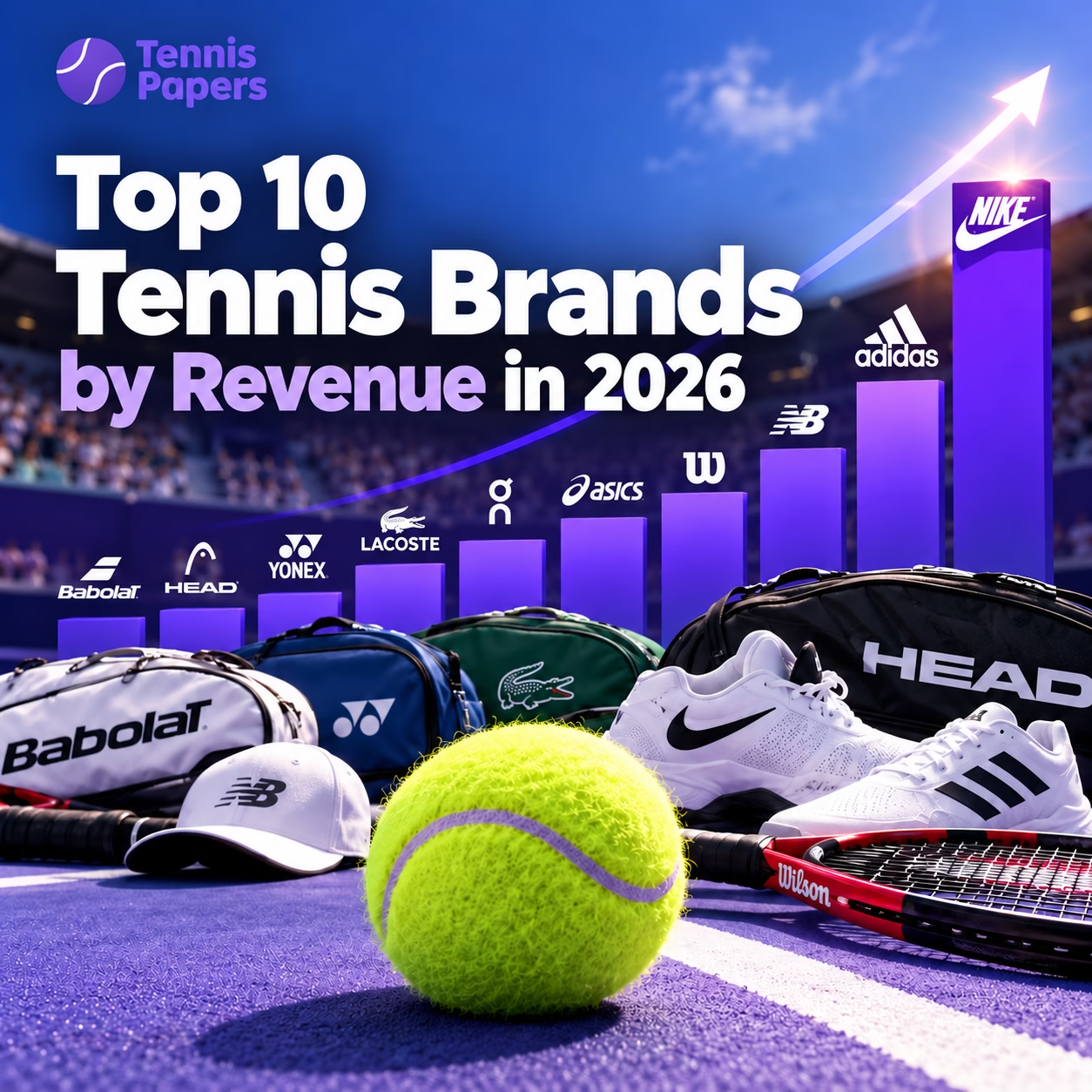
Tennis Papers ranks 10 of the world’s top tennis brands by their latest available annual company or brand revenue, highlighting the enormous differences in scale between global sportswear groups and specialist tennis manufacturers.
Important: these figures represent total company or brand revenue — not tennis-only sales. For privately held companies, the latest publicly available figures or estimates have been used. USD equivalents are rounded for comparison.
Top Tennis Brands: Top 10 by Revenue in 2026
The ranking of the top tennis brands shows just how wide the financial gap is between global sportswear corporations and specialist racquet manufacturers.
| Rank | Brand | Country | Latest annual revenue* |
|---|---|---|---|
| 1 | Nike | 🇺🇸 USA | $46.4B |
| 2 | adidas | 🇩🇪 Germany | ≈ $29.0B |
| 3 | New Balance | 🇺🇸 USA | $9.2B |
| 4 | Wilson / Amer Sports | 🇺🇸 / 🇫🇮 | $6.6B |
| 5 | ASICS | 🇯🇵 Japan | ≈ $5.4B |
| 6 | On | 🇨🇭 Switzerland | ≈ $3.7B |
| 7 | Lacoste | 🇫🇷 France | ≈ $3.2B |
| 8 | Yonex | 🇯🇵 Japan | ≈ $1.1B |
| 9 | HEAD | 🇦🇹 Austria | ≈ $0.7B |
| 10 | Babolat | 🇫🇷 France | ≈ $0.2B |
*Latest publicly available annual figures. Currency conversions are approximate.
1. Nike — $46.4 Billion
Nike remains by far the largest company in this ranking.
For the fiscal year ended May 31, 2026, Nike Inc. reported revenue of $46.4 billion, including $45.2 billion generated by the Nike brand itself.
Although tennis represents only one part of Nike’s enormous global sports business, the brand has maintained a major presence on professional tennis courts through footwear, apparel and athlete sponsorships.
Its scale illustrates the enormous difference between multinational sportswear groups and tennis-specialist equipment manufacturers.
2. adidas — Approximately $29 Billion
Germany’s adidas recorded €24.811 billion in net sales in 2025, a company record and a 5% increase in euro terms compared with 2024.
Tennis forms part of a much broader sports portfolio that includes football, running, training, basketball and lifestyle products.
Nevertheless, adidas remains one of the most recognizable apparel and footwear brands in international tennis.
3. New Balance — $9.2 Billion
New Balance has emerged as one of the fastest-growing major sports brands.
The company reported $9.2 billion in global sales for 2025, up 19% year over year and marking its fifth consecutive year of double-digit growth.
Its increasing involvement in tennis demonstrates how attractive the sport has become for brands seeking visibility within the premium performance and lifestyle markets.
4. Wilson / Amer Sports — $6.6 Billion
Wilson occupies a very different position from the three brands above.
It is one of the most recognizable names in tennis equipment, particularly for racquets, strings, balls and accessories.
Wilson belongs to Amer Sports, whose portfolio also includes Arc’teryx, Salomon, Atomic and Peak Performance. Amer Sports generated $6.566 billion in revenue in 2025.
Importantly, that figure is Amer Sports’ total revenue rather than Wilson revenue alone. Amer Sports’ Ball & Racquet Sports division generated $1.307 billion in 2025.
5. ASICS — Approximately $5.4 Billion
ASICS combines a powerful global running business with an established position in tennis footwear and apparel.
The Japanese company reported consolidated annual sales of ¥810.916 billion for 2025.
Its presence in professional tennis is particularly strong in performance footwear, making ASICS one of the significant crossover brands between running and racquet sports.
6. On — Approximately $3.7 Billion
Swiss brand On is one of the most interesting recent entrants into elite tennis.
Its growth has been exceptional: 2025 net sales reached CHF 3.014 billion, representing a 30% increase over the previous year.
Originally known primarily for running shoes, On has expanded into apparel and tennis while positioning itself at the premium end of the global sportswear market.
Its rise shows how rapidly the competitive landscape around tennis apparel and footwear is evolving.
7. Lacoste — Approximately $3.2 Billion
Few major global brands have a connection to tennis as deep as Lacoste.
Founded by French tennis champion René Lacoste, the crocodile brand has evolved into an international premium fashion and sportswear company while continuing to place tennis at the heart of its identity.
Lacoste reported sales of just under €3 billion in 2024, following growth of approximately 8% during the year.
This makes Lacoste unusual within the ranking: tennis is not merely another sponsorship category, but part of the brand’s history and identity.
8. Yonex — Approximately $1.1 Billion
Yonex is one of the most important specialist racquet-sports companies in the world.
For the fiscal year ended March 31, 2026, the Japanese company reported net sales of ¥163.643 billion, up 18.3% from the previous year.
Unlike many of the larger companies above it, Yonex generates its business primarily from sporting goods, including tennis, badminton and golf equipment.
Its influence in professional tennis is therefore considerably greater than its overall revenue ranking alone might suggest.
9. HEAD — Approximately $700 Million
HEAD is another specialist sporting-goods company whose importance within tennis exceeds its overall company size.
The Austrian group is a major producer of tennis racquets, strings, balls, footwear and accessories, alongside its strong winter-sports business.
The latest publicly reported figure available places HEAD’s worldwide annual revenue at approximately €650 million.
HEAD’s equipment is used throughout professional, junior and recreational tennis, making it one of the sport’s most established specialist brands.
10. Babolat — Approximately $200 Million
Babolat is the smallest company in this Top 10 by revenue, but that does not reflect its influence within tennis.
The French company specializes heavily in racquet sports and has deep roots in the sport dating back to the development of its first natural-gut tennis strings in the 19th century.
Babolat VS recorded €169.4 million in revenue in 2025, compared with approximately €152 million in 2024.
Unlike Nike or adidas, almost all of Babolat’s brand recognition is directly associated with tennis and racquet sports.
Size Doesn’t Equal Tennis Influence
Looking at the top tennis brands by revenue reveals an important distinction: company size and influence within tennis are not necessarily the same thing.
Nike’s annual business is more than 200 times the size of Babolat’s, but a specialist manufacturer such as Babolat can still have an enormous impact on racquets, strings, junior development and professional tennis.
The same applies to Yonex and HEAD.
Meanwhile, brands such as On and New Balance demonstrate that competition in tennis footwear and apparel is increasing, as newer challengers attempt to take market share and visibility from established giants.
Tennis therefore sits at the intersection of two very different business models: enormous multisport corporations and smaller specialist companies for which racquet sports represent a central part of their identity.
Key Takeaway
Among the top tennis brands in the world, Nike is the clear financial leader, followed by adidas, but revenue tells only part of the story.
When it comes specifically to tennis, specialist companies such as Wilson, Yonex, HEAD and Babolat can have an influence on the sport far beyond what their overall company revenues suggest.
That combination of global sportswear giants and specialist manufacturers is one of the characteristics that make the tennis industry particularly interesting.
Ultimately, the top tennis brands combine very different business models, from global sportswear giants to companies whose reputation has been built almost entirely around racquet sports.
Sources / methodology
Revenue figures are based on the latest publicly available financial information, with priority given to official annual reports and investor releases from Nike Investor Relations, adidas Annual Report 2025, Amer Sports Investor Relations, ASICS Corporate and On Investor Relations. For privately held companies, the latest available published financial information or executive disclosures were used. Revenue figures represent total company or brand revenue rather than tennis-only sales, and USD equivalents are rounded for comparison.
Ces cinq liens sont des sources officielles, donc parfaits comme liens sortants dofollow dans cet article. Nike confirme notamment $46.4B pour FY2026, adidas €24.811B en 2025, Amer Sports $6.566B, ASICS ¥810.916B et On publie ses résultats annuels 2025 via son espace investisseurs.
Continue Exploring Tennis Papers
Discover more junior tennis resources, including player interviews, rankings, tournaments, academies, sponsorship and career development.