
How can families reduce junior tennis costs without compromising a player’s development?
What should parents know before signing a junior tennis sponsorship agreement?
Why can professional tennis players win prize money and still lose money?
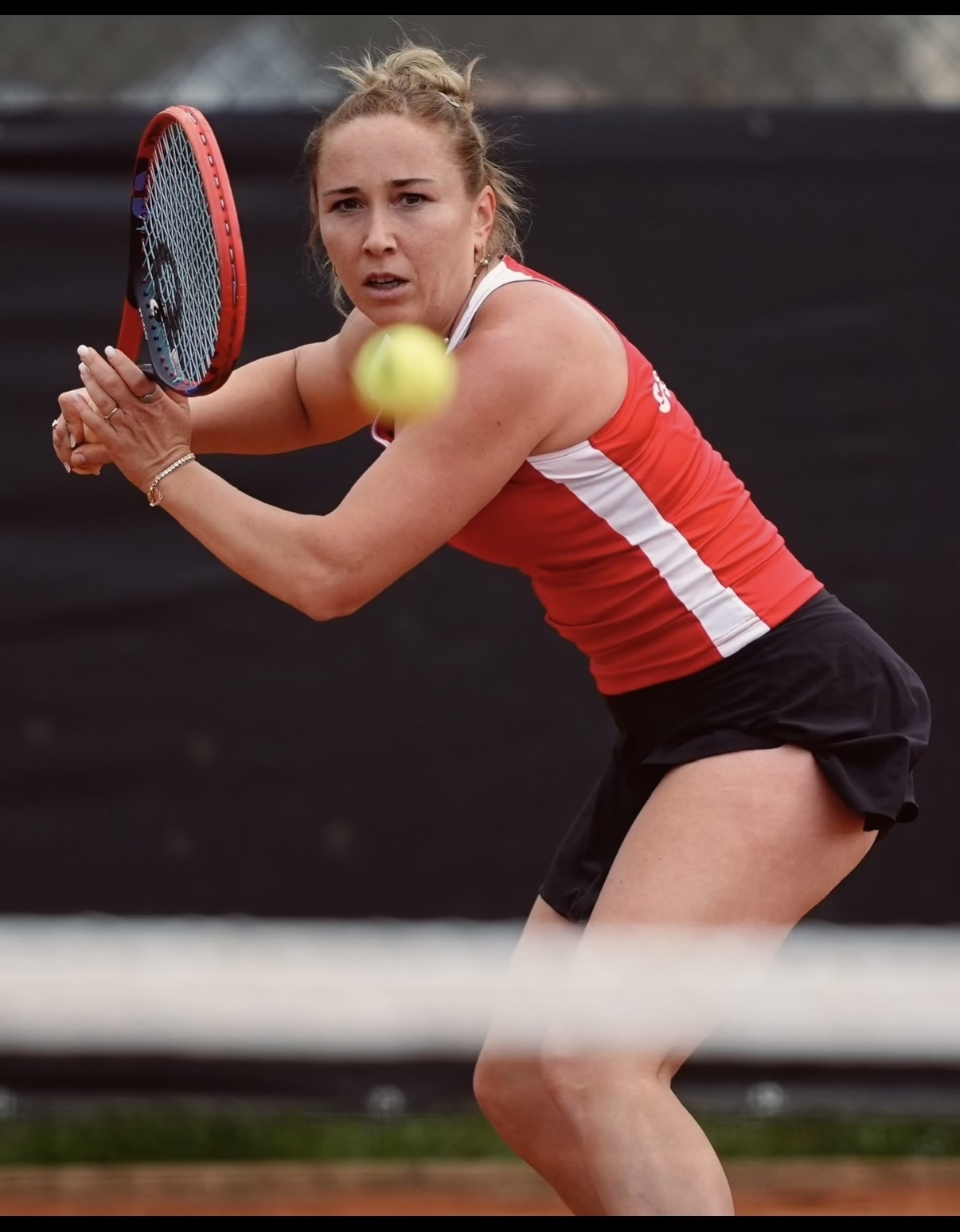
In this Sofia Shapatava interview, the Georgian professional tennis player and SoTi Management founder discusses the financial realities of junior and professional tennis. Still active in competition, she draws on her experience as a player and ITF World Tennis Tour Players Panel representative to share insights on coaching, sponsorship, prize money, equal opportunities and player development.
Your Background & Experience
My career has shaped me in many ways. I first experienced tennis as a player, then from the perspective of a part-time coach, and now, through my management company, I continue to explore and understand the tennis industry from the inside. One thing I strongly believe is that you never stop learning.
These different roles have given me a much broader perspective on the sport. I believe I understand certain challenges more deeply because I have experienced them from different sides.
Today, I no longer see tennis only through the eyes of a player. I understand the challenges athletes face, but I also recognize the hurdles that exist from an organizational and management perspective.
Most importantly, I have learned that there is rarely just one way to approach a tennis career. Understanding the industry from different angles allows me to make more informed decisions, find alternative solutions, and help athletes position their careers more strategically.
Federation Support & Equal Opportunities
Personally, I have never been a big fan of the approach of choosing “favourites” at such a young age.
Tennis is an individual sport, and every young athlete develops differently. Some children mature earlier, while others need more time. Some develop physically faster, while others grow into their bodies and abilities much later.
We also have to consider when a child started playing tennis. Naturally, a 12-year-old who started training and competing at four or five may have an advantage over someone who started at seven or eight. But these differences become less significant with age.
That is why I personally disagree with identifying a few promising juniors at 11 or 12 years old and investing heavily in them based on the assumption that they are the next world No. 10. At that age, we are often judging who is ahead in their development, rather than who has the greatest long-term potential.
As for parents, I believe there are different ways to approach junior tennis, depending on what the family wants to achieve.
One important thing to understand is that being a top junior does not guarantee becoming a top professional. A very small percentage of young players eventually reach the very highest level of professional tennis. The numbers are actually very low.
That is why I think parents should approach junior tennis primarily as a period of learning, development and growth, rather than demanding results.
Focus on building a solid foundation, developing good habits, finding the right coaching environment and allowing children to progress at their own pace.
And if your child is not selected for federation support, it certainly does not mean their opportunities are gone. There are other ways to build a pathway, find support, plan competitions and manage development according to the family’s possibilities.
The goal should not be to produce the best 12-year-old tennis player. The goal should be to give that 12-year-old the best possible chance to become the player they are capable of becoming.
Yes, absolutely. Young players from smaller tennis nations or families with limited financial resources definitely face additional barriers.
The first major challenge is access to quality training and a competitive environment. Smaller countries often don’t have enough strong junior players to practise and compete against regularly, which can slow down development. The quality of coaching can also vary significantly, and sponsorship opportunities are usually much more limited.
Coming from a small country myself, I know firsthand how difficult these challenges can be.
Ironically, one of the biggest obstacles is not even directly connected to tennis. It is your passport.
Visa requirements, restrictions on how long you can stay in certain countries and long application processes can seriously limit a player’s ability to plan and compete internationally. These are things that players from countries with stronger passports often don’t even have to think about.
And there is another issue that I think we should be more open about. Players are not always treated equally.
Unfortunately, nationality, federation sponsorship and connections can sometimes influence how players are treated by certain organizations and tournaments. Athletes supported by powerful federations or established management agencies with a big name may receive preferential treatment or have access to opportunities that others simply don’t, such as better scheduling or wild cards.
I might not get a lot of likes for saying this, but this problem is not new, and pretending it doesn’t exist won’t make it disappear.
Fortunately, we live in 2026, and access to information and alternative opportunities has become much easier.
But having access to information and knowing how to use it are two different things.
This is where I believe the right guidance becomes extremely important. This was the reason I created my company in the first place. I had to learn the hard way, and I want to help players avoid repeating my mistakes.
We cannot promise equal results, but we should be working towards more equal opportunities.
Talent exists everywhere. Unfortunately, opportunities don’t. And I believe our responsibility as people working in the tennis industry is to help close that gap.
The Real Cost of Tennis & Sponsorship
Tennis is a very complex sport, and I could probably spend hours discussing all the expenses involved in developing a junior player and transitioning to professional tennis.
Of course, there are the obvious costs: racquets, strings, shoes, clothing, coaching, court fees, etc. But developing a tennis player goes far beyond simply paying for tennis lessons and tournaments.
You also need to consider proper physical preparation, nutrition, recovery, injury prevention, and overall well-being.
And one thing I strongly believe should never be neglected is education. Young players need to continue studying and building a future outside of tennis. Professional sport is unpredictable, and having an education and alternative opportunities is extremely important. It also provides peace of mind. Fortunately, university tennis nowadays offers incredible possibilities for athletes to combine their education with competitive tennis.
Now, when it comes to actual numbers, I don’t believe there is one universal price tag that tells you how much it costs to develop a professional tennis player.
Every athlete is different, and every family has different financial possibilities.
You need to understand the athlete’s level, ambitions, expectations, needs, and most importantly, their available budget. Only then can you start building a realistic development plan.
There are different ways to organize training, tournament schedules, travel and accommodation. Sometimes you can significantly reduce expenses simply by making smarter decisions. Of course, compromises will be necessary.
It takes a lot of work, flexibility and proper management, but I believe you can build a meaningful development plan around almost any budget.
And this is something I feel strongly about. I don’t think families should immediately give up on their child’s ambitions simply because they cannot afford the numbers they see other players spending.
Of course, we have to be realistic about financial limitations, but we should also be creative in finding solutions.
My advice is to actively look for support, build relationships and create opportunities, but never build your entire development plan around money that has not yet been secured.
Be proactive. Choose tournaments that not only help a player develop but also increase their visibility. Participate in activities and events that promote the athlete, build connections within the tennis industry and look for opportunities to attract potential sponsors.
Start building the player’s personal brand from a young age. Keep an updated athletic resume, document their progress and achievements, create videos showcasing their game and develop a professional presence that makes it easier for coaches, sponsors, academies, and other potential supporters to discover them.
I believe that today, being a good tennis player is not always enough. You also need to learn how to present yourself, communicate your potential and make opportunities happen rather than simply waiting for someone to notice you.
And most importantly, remember that investing in a young athlete should be about giving them the opportunity to develop, not demanding that they repay that investment through results.
It is important that parents step into tennis with their eyes wide open. You need to understand that you will have to spend money before you have anything to show. That money is gone without guarantees, but it is the reality.
There are many different types of sponsorship agreements in tennis, and the conditions can vary significantly depending on the player’s level, results, potential, and the company involved.
For example, equipment manufacturers can offer full international contracts that provide equipment, financial compensation, and additional bonuses based on tournament results or ranking achievements.
They can also offer equipment-only contracts for several years, annual equipment allowances, or even one-time support, where a company simply sends a box of racquets, clothing, or other products without any further commitment.
One thing I would always recommend is trying to build a long-term relationship with a sponsor. If a long-term agreement is not possible, at least try to negotiate an opportunity to review or renegotiate the conditions as the player develops.
It is also extremely important to pay attention to the details of the contract. What exactly is the sponsor providing, and what are they expecting in return? Are you required to use their equipment exclusively? Are you allowed to wear or use competing brands during practice, off court, or on social media? Are there any performance requirements or restrictions?
These details might seem small, but they can create problems later.
You also don’t want to damage your relationship with a sponsor simply because you misunderstood your obligations. Maintaining good relationships is extremely important in tennis, especially when you want to keep the door open for future opportunities.
Financial sponsorships are usually more complex, particularly when private sponsors or investors are involved.
In these cases, I would always recommend having a qualified lawyer review the agreement before signing anything. You need to understand exactly what you are committing to, whether there are repayment obligations, percentages of future earnings involved, exclusivity clauses, termination conditions, or other restrictions.
The last thing you want is to accept financial support today and discover years later that you have obligations you never fully understood or expected.
Performance-based agreements are another possibility, where additional compensation or benefits depend on achieving specific results, rankings, or milestones. These can be attractive, but families need to understand how realistic those targets are and what happens if they are not achieved.
There are also sponsorship arrangements with clubs and academies. For example, a player might receive free or discounted training, court access, or other services in exchange for representing the club, promoting it on social media, or participating in certain activities.
Again, it is important to understand what you are promising and be realistic about what you can actually deliver.
For junior players especially, I believe parents should be careful not to commit their children to obligations that could limit their future opportunities. A contract that looks attractive at 12 or 13 might not be suitable for the same player at 16 or 17.
My general advice is simple: don’t look only at what a sponsorship gives you today. Look at what it requires from you tomorrow.
The direct answer is that, in the beginning, you usually earn nothing. In fact, you are constantly operating at a loss.
When you first start competing professionally, your expenses are generally much higher than your prize money. You are paying for travel, accommodation, coaching, equipment, physical preparation and everything else required to compete internationally.
And even when you start winning matches and earning prize money, it doesn’t necessarily mean you are making a profit.
You have to remember that the prize money you see on paper is not the amount a player actually takes home.
For example, a player might have a successful tournament, reach the semifinals or even win the title and still finish that week financially in the negative.
As your results improve and your ranking goes up, you gradually gain access to tournaments with higher prize money. But your expenses can also increase because you are traveling more, competing at a higher level and potentially investing more in your team.
Realistically, for many players, the possibility of consistently breaking even or making a profit from prize money alone comes when they start competing in Grand Slam events. And reaching that level is a very long and expensive journey.
This is why I keep emphasizing the importance of financial planning. A professional tennis career is not simply about winning matches and collecting prize money. It is also about surviving financially long enough to give yourself the opportunity to reach a level where the sport can start paying for itself.
And I think this is one of the biggest misconceptions about professional tennis. People see prize money figures and assume that professional athletes are earning a living from the sport. In reality, many players spend years investing far more money than they earn.
Taxes on prize money vary from country to country, depending on the tax laws and regulations of the country where the tournament takes place. Players may have taxes withheld directly from their prize money, and depending on their country of tax residence and applicable tax laws, they may also have additional reporting or tax obligations at home.
This means that the same amount of prize money can result in different net earnings depending on where you compete.

Reducing Costs & Planning Development
There are actually many different ways to reduce expenses in tennis without necessarily compromising a player’s development. It all comes down to planning, flexibility, and understanding what is really necessary and what is simply more convenient.
Travel is one of the biggest areas where families can save money. For example, instead of staying in hotels, players can rent apartments, share accommodation with other athletes, and prepare their own meals.
Renting a car together with other players, sharing transportation costs, or driving instead of flying can also make a significant difference.
First of all, I believe it is very important to find a good coaching environment. A good coach should genuinely care about the player’s development and not be focused solely on financial gain.
There are several ways to make coaching more affordable. For example, families can look for opportunities to join a group of players of similar age and ranking. This allows them to share coaching expenses, especially when travelling to international tournaments.
Another option, and something people don’t always like to hear, is to reduce the number of practice hours. More practice doesn’t necessarily mean better practice. I would much rather see a young player train fewer hours with a high-quality coach and a clear plan than spend endless hours on court without a real purpose.
Quality should always come before quantity. The goal is not to spend as much money as possible, but to use the available resources wisely and create an environment where a player can develop.
I think this is a question that can only be answered on a player-by-player basis. There is no universal formula for creating the perfect tournament schedule.
Every player is different. Some thrive on competition and travelling, while others need more time at home to train, recover and develop their game.
The most important thing is to find the right balance for each individual player. Ranking opportunities, development, financial resources and the player’s physical and mental well-being should all be taken into consideration.
I believe one of the biggest mistakes families can make is following someone else’s schedule simply because it worked for them. What works for one player might not work for another.
The goal should be to create a schedule that supports the player’s long-term development while making the best possible use of the family’s resources.
College Tennis, Coaching & Management
Universities offer one extremely important thing, and that is education.
We have to remember that professional sport is unpredictable, and injuries are unfortunately part of an athlete’s career. No matter how talented or successful you are, it is important to have an education and opportunities outside of tennis. You need to think about your future beyond professional sport.
Another major advantage of university tennis is the amount of competitive experience you can gain. College players compete in numerous matches throughout the season, often against strong opponents, without having to personally finance every tournament trip, as travel and competition expenses are generally covered by their university programs.
This allows young athletes to continue developing, gain match experience, improve physically and mentally, and mature as players while getting a degree.
That experience can become extremely valuable if they decide to pursue a professional tennis career afterward.
I don’t see university tennis as giving up on a professional career. I see it as another pathway towards one, with the added advantage of building a future beyond the sport.
I think choosing the right coach and training environment is one of the most important decisions parents make during their child’s development.
From my own experience as a professional player and also through my husband’s work coaching young athletes, I have learned that being a good tennis player does not automatically make someone a good coach. Coaching requires a completely different set of skills.
First of all, I would look at the coach’s qualifications, experience and ability to work with young athletes. It is important to understand that coaching a 12-year-old is very different from coaching a professional player. Children are still developing physically, mentally and emotionally, and a coach needs to understand these differences.
I would also pay close attention to whether the coach has an individual approach. Every player is different, and I don’t believe in applying exactly the same training methods or development plans to everyone.
One of the biggest warning signs for me is when a coach starts making promises about future rankings or professional success.
Nobody can guarantee that a kid will have certain results or become a professional player, regardless of how talented they might seem today. Tennis development is unpredictable, and I would be very cautious of anyone selling guaranteed results and promises.
I would encourage parents to observe how a coach behaves during both good and difficult moments. How do they react when a child loses? How do they communicate when progress is slower than expected? Do they encourage learning, or is everything focused on immediate results?
I believe having the right management company supporting you can be valuable at almost any stage of a player’s development. It doesn’t necessarily mean that a 10-year-old needs a full-time manager, but having access to professional guidance, reliable information, and the right connections can make a significant difference, even at a young age.
Of course, it depends on what services the management company offers and what the player or family is looking for.
Management is not only about finding sponsors or negotiating contracts. It can also involve career planning, tournament scheduling, travel organization, budget management, finding suitable coaches and training environments, university recruitment, and creating opportunities for athletes to develop their careers.
Sometimes the most valuable thing a management company can offer is helping a family avoid expensive mistakes.
At SoTi Management, we believe strongly in an individual approach. Every player has different needs, ambitions, and financial possibilities, so I don’t believe in offering exactly the same services or conditions to everyone.
The same applies to how partnerships are financed.
Some management companies work with fixed fees for specific services or ongoing support. Others operate on a commission basis, receiving an agreed percentage of certain earnings or sponsorship agreements. There can also be different partnership structures depending on the level of involvement and the commitments required from both sides.
At SoTi, we offer flexibility in this area as well. Some partnerships are based on fixed fees, while others can be commission-based. It always depends on what the athlete needs, what services we are providing and what kind of cooperation makes sense for both sides.
I also think it is important for families to understand exactly what they are paying for. What services are included? What are the expectations? How long does the agreement last? Are there any additional fees or commissions?
These things should be discussed openly from the beginning.
Ultimately, I don’t believe professional management should be reserved only for athletes who are already successful or financially well-supported.
In many cases, the players and families with fewer resources are precisely the ones who could benefit most from proper planning and guidance.
For me, good management is not about taking over an athlete’s career. It is about helping them make informed decisions, find opportunities and build a pathway that fits their individual circumstances and ambitions.
Making Professional Tennis More Sustainable
We have talked a lot about the costs of professional tennis, and I believe financial sustainability remains one of the biggest challenges for lower-ranked players.
The ITF has been making improvements, including introducing hospitality at W75 and W100 tournaments, which is a great step forward. However, personally, I would be even happier to see more support at lower-level events, such as W15 and W35 tournaments, because those are the players who struggle the most financially.
Of course, the challenge is that there are significantly more tournaments at these levels, and providing hospitality everywhere would require substantial funding.
I would also like to see more attention given to how tournament expenses are distributed and how we can make the first steps into professional tennis more financially sustainable.
But ultimately, almost every discussion comes back to the same issue: money. More funding means more opportunities to improve the system.
At the same time, I want to be fair to the ITF. Having served on the ITF World Tennis Tour Players Panel for four years, I know that much more work is being done behind the scenes than people realise. There are genuine efforts to improve conditions for players, and progress is happening, even if it is not always visible from the outside.
Unfortunately, change is slow, and there is still a long way to go. But I think it is important to recognise both the problems that remain and the improvements that have already been made.

Advice to the Next Generation
First: Do not neglect your education. It can be your pathway to a professional tennis career.
Second: Do not neglect nutrition, recovery and all the little details. They matter more than you think.
Third: Never give up on your dream just because you think you are at a disadvantage. There are ways, and you deserve to have a chance.
Sofia, thank you for sharing your experience, honest perspectives, and valuable insights with Tennis Papers! 🎾
We wish you continued success in supporting young players, creating opportunities, and helping make tennis more accessible to everyone! 💜
Key Takeaways for Junior Players & Parents
- Focus on long-term development, not early results. Junior rankings and federation selections do not guarantee professional success. Every young player develops at a different pace.
- Build a realistic financial plan. Understand your available budget, anticipate expenses and never rely on sponsorship money that has not yet been secured.
- Prioritize coaching quality over training quantity. Fewer hours with a qualified coach and a clear development plan can be more valuable than excessive training without a specific purpose.
- Choose tournaments strategically. Build an individual competition schedule that balances development, ranking opportunities, financial resources, recovery and mental well-being.
- Look for practical ways to reduce expenses. Sharing coaching, accommodation and transportation costs with other players can make international competition more affordable.
- Understand sponsorship agreements before signing. Examine exclusivity clauses, performance requirements, financial commitments and termination conditions. Seek qualified legal advice for complex agreements.
- Remember that prize money is not profit. Travel, coaching, accommodation and taxes can exceed tournament earnings, even when a player achieves strong results.
- Never neglect education or alternative pathways. University tennis can provide competitive experience and academic opportunities while keeping the possibility of a professional career open.
About Sofia Shapatava & SoTi Management

Sofia Shapatava
Sofia Shapatava is a Georgian professional tennis player, sports executive, and founder and CEO of SoTi Management. She reached a career-high WTA singles ranking of No. 180 and served on the ITF World Tennis Tour Players Panel for four years. Still active in professional competition, she combines nearly two decades of tennis experience with expertise in athlete development, career planning, sponsorship, and university recruitment. Through SoTi Management, she helps players and families navigate the challenges of competitive tennis and build sustainable career pathways.
Tennis Papers sincerely thanks Sofia Shapatava for sharing her time, professional experience and valuable insights with the international junior tennis community.
