
How should junior players handle disputed calls without losing their composure?
What should parents and coaches understand about rules, fair play and on-court disagreements?
What happens behind the scenes of a chair umpire’s career, from junior tournaments to a Wimbledon final?
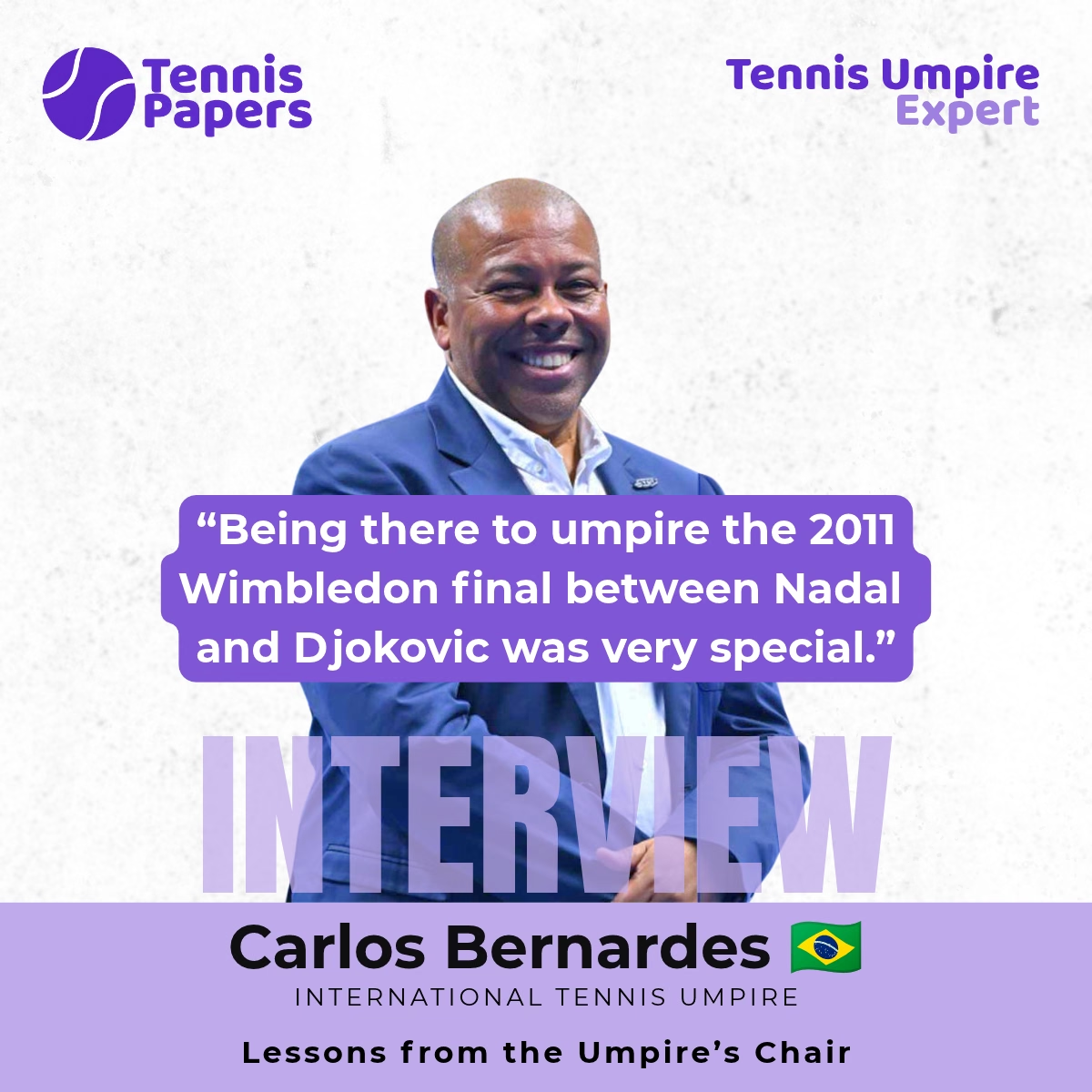
In this Carlos Bernardes interview, the Brazilian tennis umpire shares lessons from four decades on the circuit. From resolving disputed calls to staying focused on the next point, he offers practical advice for junior players, parents and coaches, alongside memories of great matches and a look behind the scenes of professional officiating.
Carlos Bernardes Interview: From Brazil to the Umpire’s Chair
I started in tennis by climbing over the wall of a football stadium where there was a tennis club. Every Sunday, my friends and I would play all day, using athletics hurdles as a net. Then one day, the coach there waited for us and invited us to enter the club through the front door.
After a few years playing at that club and also representing my city, São Caetano, I started teaching there. One day, I saw an advertisement in a newspaper about a women’s tennis tournament, a Federation Cup World Group event. It was my first contact with professional tennis.
After a period working at some tournaments in Brazil, one day my boss at the tennis club where I worked told me I would have to choose: the club or continuing with the umpiring I enjoyed so much. You already know what I chose… But I never imagined becoming an international umpire.
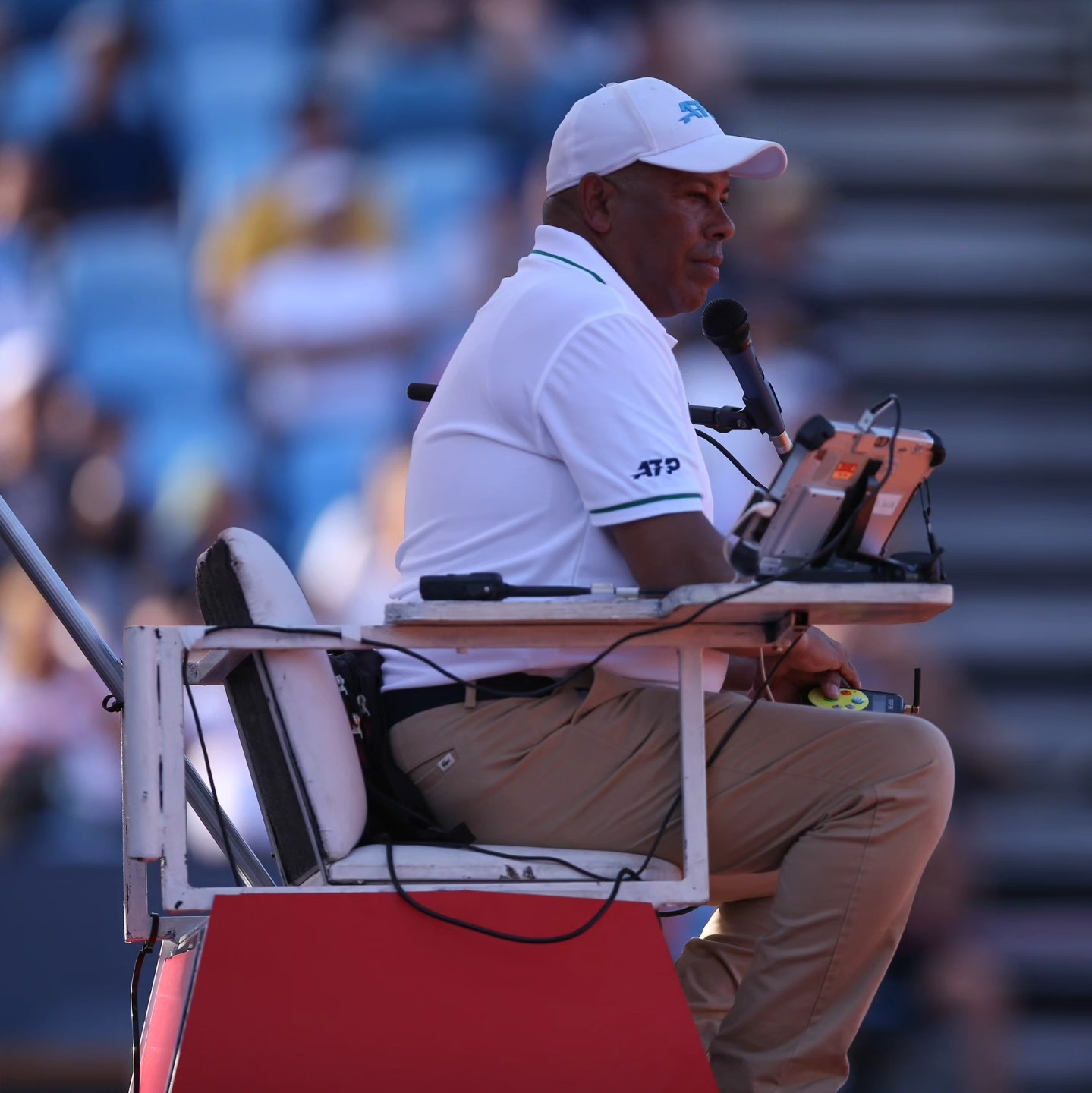
The umpire must prepare and check all their equipment before going onto the court: radio, tablet or scorecard depending on the tournament, a coin for the toss, and go to the bathroom to feel a little lighter, hahaha.
During the match, it is not just about whether the ball is in or out. Depending on the tournament, even that is not necessary because Hawk-Eye, or rather ELC, makes the calls. But there are still the players and how they behave, the crowd, the ball kids, and so on.
Disputed Calls, Rules and Staying Calm
Well, controlling yourself is not easy, but when questioning a call, you should avoid an aggressive tone because you will undermine your position and could even receive a warning.
On clay, ask the umpire to check the mark.
On a hard court, it is more complicated. Complaining without creating a problem is not easy, but ask whether they are sure about what they saw. Stay calm, because nerves and aggressive behaviour will only make things worse.
Once the discussion is over, think about the next point. Always.
As I said before, on clay, ask to be shown the mark. It is very important that you know where the ball landed. If you have any doubt, ask whether you can go to the other side to see it. If you disagree with the mark, ask for the supervisor to be called. But as I said before, you have to know what you are contesting.
On a hard court, when the calls start becoming very doubtful, follow the same procedure. Ask for the referee and explain that you would like them to stay nearby and watch the match, or assign someone to umpire. Sometimes that person sits in the chair and only intervenes if they see an incorrect call.
As for the score, always announce it loudly after every point so that everyone can hear. Also, concentrate all the time. The player must remember the points played. If there is a disagreement about the score, both players will have to recall it point by point until they agree, with the referee present.
A player should know all the rules of the sport they play. When you know the rules, you know how to talk to the referee. You know how to question your opponent.
One simple example is when a player touches the net with their foot or something they are carrying. Or when they hit a ball that touches the net between the singles stick and the net post in a singles match.
The ball is considered out because that section between the singles stick and the net post is considered a permanent fixture of the court. These are situations that even professional players do not always know about. The rules have to be the foundation for a tennis player.
Tennis is a sport played point by point. If something goes wrong, a call or an argument, you should think about the next point. Do not keep thinking about what has already happened.
Point by point. The next point is always the most important.
You can finish with fewer points won in a match and still win the match.
Point by point. The next point is always the most important.
Parents, Coaches and the Changing Role of Officials
I would also advise parents and coaches to study the rules first of all. Many do not know them, and instead of helping, they only get in the way.
Another thing is that these problems on court help the player develop. As I said before, if the player knows the rules, they are prepared to face a conflict.
Parents and coaches should not get involved. That creates dependency and will make the player more vulnerable in an argument.
Today, the most difficult decisions would be those relating to the players’ code of conduct. Announcements to the crowd and television audiences are also more necessary now than in the past.
To start, contact your local federation and sign up for an umpire training course. I think courses for line judges still exist, but those roles are disappearing with technology.
For chair umpires, start by officiating at small events and junior tournaments. It is important to feel what it is like sitting in that chair and see whether it is really what you would like to do.
Memorable Matches and Lessons in Fair Play
Agassi vs Blake, US Open.
A night session at the US Open. Blake was two sets to love up, and I thought I would get back to the hotel early. It ended up going to five sets, with a 7–6 score in the fifth, and I went to sleep at three in the morning. That match is mentioned in both players’ books.
Becker vs Ivanisevic, Split.
A very close match, but with a special setting because it was played in Goran’s home city, in a packed stadium. Two or three tie-breaks, with a special atmosphere.
Yes, a match between Rafter and Cherkasov. On match point for Rafter, a ball was called in his favour, which would have ended the match. He said the ball was out and gave the point to Cherkasov.
An exemplary gesture, especially as he ended up losing the match.
Editor’s note: In his interview with Tennis-Prose, Andrei Cherkasov recalls the second-set tie-break in Adelaide in 1997.
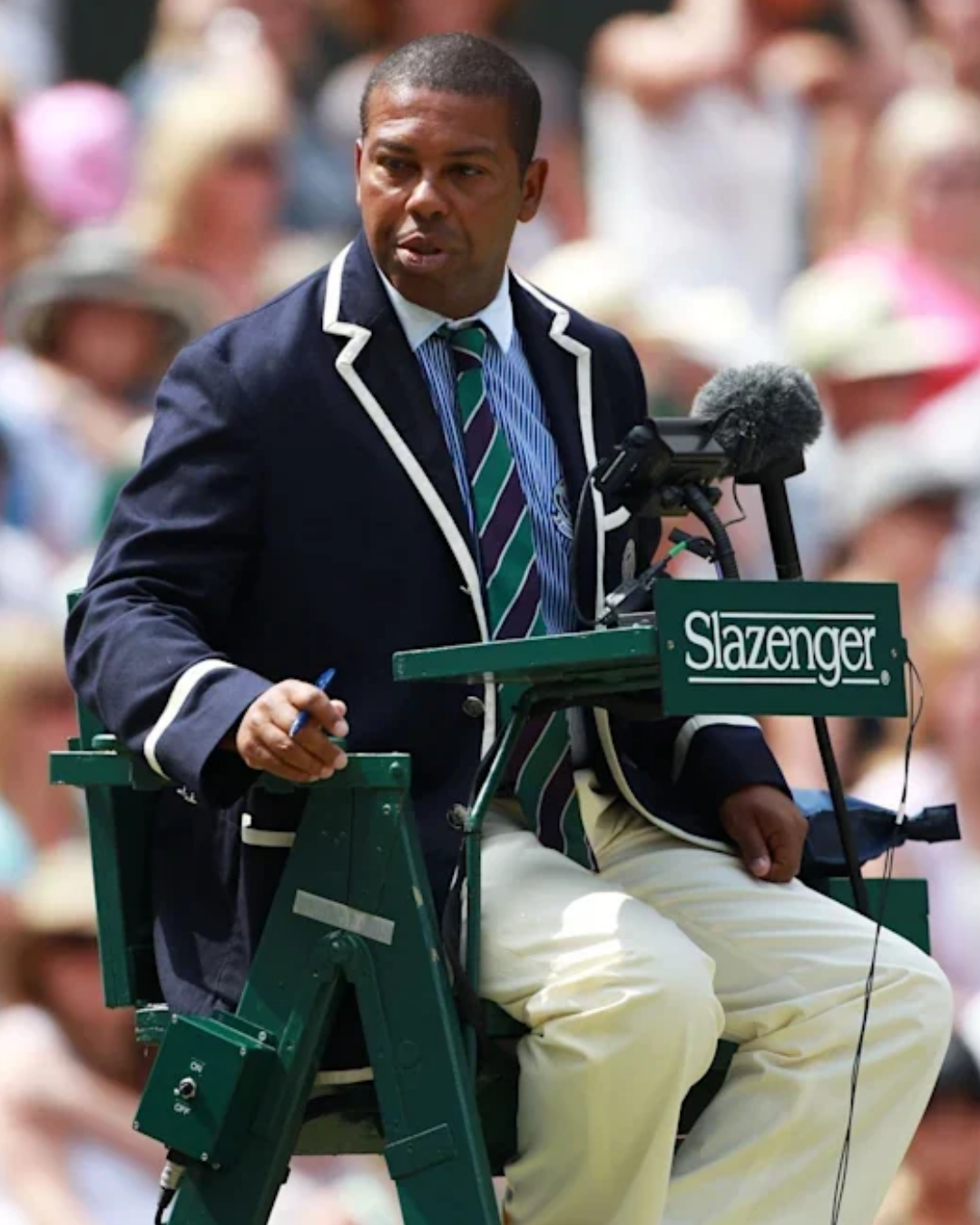
The 2011 Wimbledon final between Nadal and Djokovic.
Wimbledon was the tournament I watched on television when I was 11 or 12, and being there to umpire that match was very special.
Well, we had a seat right on the court. Being there close to the players is very different. You feel the atmosphere much more than you might imagine.
Being there close to the players is very different. You feel the atmosphere much more than you might imagine.
Yes, after a few years, you start to appreciate and enjoy the matches more. I learned a lot from being so close to so many good players.

Behind the Scenes of a Wimbledon Final
During the first week, it is straightforward. We normally do a maximum of two matches a day, one men’s match and one women’s match. We always make sure not to assign an umpire of the same nationality as a player.
In the second week, there are fewer matches, and the supervisors and chief of umpires already have an idea of which countries are represented in the final rounds. That makes it easier to select the umpires. The closer you get to the final, the smaller the group of umpires becomes.
There is another factor. The tournament has umpires from different places and organisations, such as the ATP, WTA and ITF. Within each group, there is a small number we call full-time umpires. They are generally the leading umpires, so to speak.
There are not many, perhaps 10 to 15 at a Grand Slam. A Grand Slam is considered an ITF tournament, so the ITF umpires would have priority on that list for the final.
In 2011, the list included a Spanish umpire, an American, me and an English umpire. As the other two had already done the final, it would have gone to the Spanish umpire.
But who was still playing in the quarter-finals? Nadal, Murray… I do not remember whether Roddick was still there, but I remember that Nadal would prevent the Spanish umpire from doing the final.
At Wimbledon, the quarter-finals were on Wednesday, the semi-finals on Friday and the final on Sunday. To sum it up, I had to wait from Monday until Friday afternoon to find out whether I would umpire the singles final.
It felt like an endless wait because Nadal was playing the second semi-final against Murray. Only after that match finished did I know for certain that I would umpire the final.
After receiving a letter confirming your assignment to the final, you also receive two invitations so you can invite anyone you want to watch the match.
Before the match, there is always preparation before going onto the court, a protocol to meet the person who will perform the coin toss, together with the tournament referee. The match itself went smoothly.
Afterwards, there is the ceremony, when a club member and someone from the royal family come onto the court. You receive a commemorative medal and the scorecard signed by the players.
It does not end there. You are invited to the Champions’ Dinner, where you see the tournament winners and some VIPs.
How a Chair Umpire’s Career Works
Let us take it step by step to explain how chair umpires are divided into categories. There are four or five different categories, divided by badges:
- Gold
- Silver
- Bronze
- White
- Green
Green is the beginner or national-level badge, and Gold is the highest category.
In terms of fees, Gold Badge umpires receive the highest fees because, in theory, they officiate the most important matches and the biggest tournaments.
Within this group of Gold Badge umpires, there is a subgroup of umpires who work more closely with the organisations: ATP, WTA and ITF.
These umpires receive different arrangements from the other umpires:
- They can choose their calendar.
- Their hotel and transport expenses are paid.
- Meals are provided at the tournament.
- Their fees are higher than the average for other umpires with the same badge.
Other umpires generally have to contact the tournament and its chief of umpires to give their availability. The organisations also contact some umpires to ask whether they would like to work at particular events.
Only the ATP has umpires who work as company employees. Today, there are only six.
These are the only umpires who work as employees of a company. All the others work as independent contractors.
Key Takeaways for Junior Players & Parents
- Learn the rules of your sport. Understanding the rules helps players explain a concern, communicate with officials and handle disagreements more confidently.
- Question a call calmly and respectfully. Ask for clarification without using an aggressive tone. Once the discussion ends, return your attention to the next point.
- Ask an official for help when a dispute continues. In matches without a chair umpire, involve the referee when you cannot resolve a disagreement about calls or the score.
- Keep track of the score. Carlos recommends announcing the score clearly and remembering the points played so disagreements can be reconstructed with an official.
- Help young players become independent. Parents and coaches should understand the rules and prepare players to handle on-court difficulties without taking over every discussion.
- Value fair play, even on match point. Carlos’s memory of Rafter correcting a call in his opponent’s favour shows how a sporting gesture can leave a lasting impression.
- Explore officiating through training and experience. Contact your local federation about courses and start with small events and junior tournaments to discover whether umpiring is right for you.
Thank you, Carlos, for sharing your memories and the lessons learned from a lifetime in tennis. Your perspective offers young players, parents and coaches valuable reminders about respect, independence and the importance of the next point. 🎾
This interview was conducted in Portuguese and translated into English.
Copyright & Editorial Reuse
© 2025-2026 Tennis Papers. All rights reserved.
When quoting or referencing this exclusive interview, please credit Guillaume Laisne as the interviewer, identify Tennis Papers as the original source, and include a direct, clickable link to this interview.
Reproduction of substantial excerpts or the full interview requires prior written permission, except where permitted by applicable copyright law.
For further information, please consult our Terms of Use .
About Carlos Bernardes
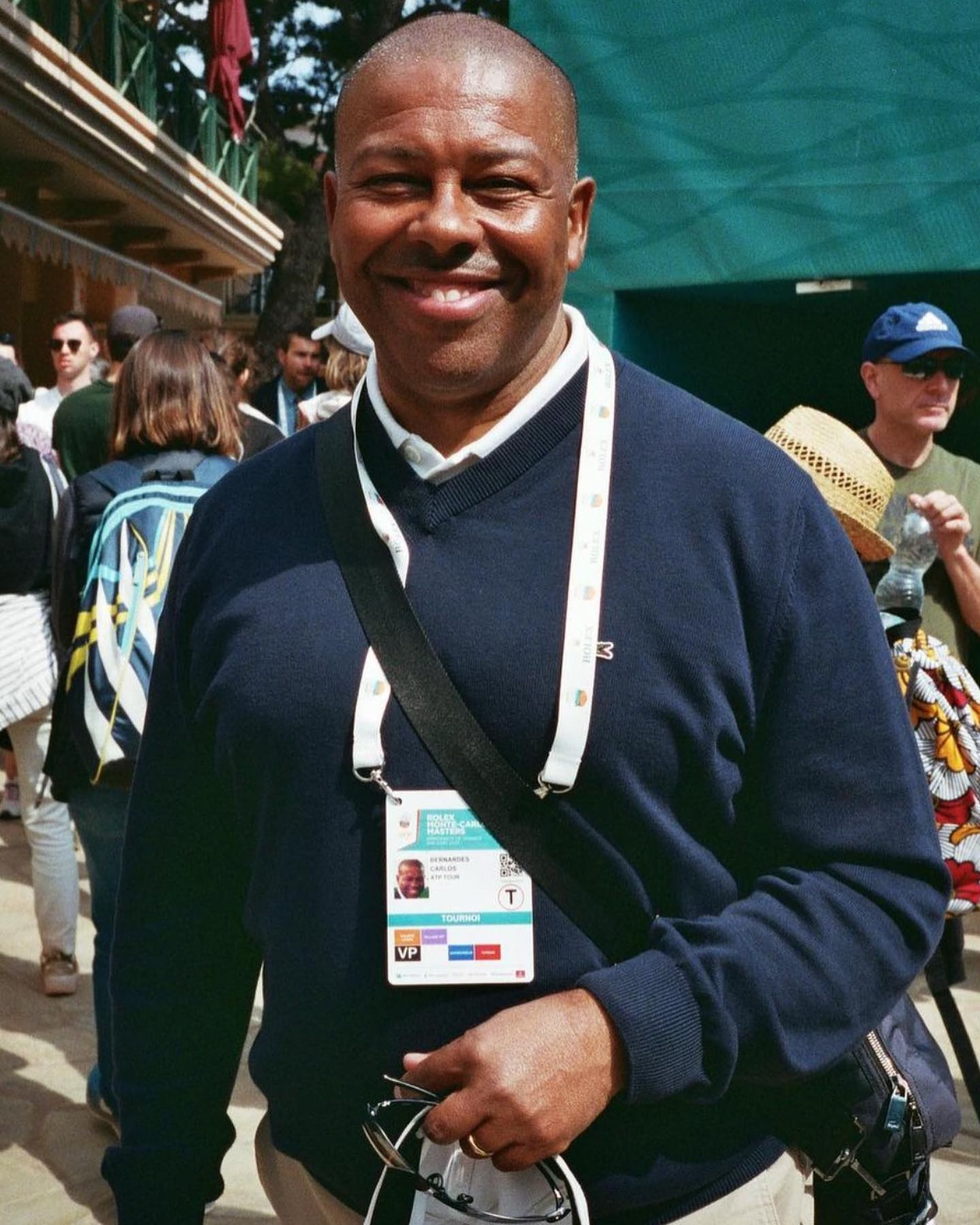
Carlos Bernardes is a Brazilian tennis umpire whose career spans four decades on the professional circuit. His journey began in São Caetano, Brazil, where he played and taught tennis before moving into officiating. His work has taken him to more than 100 countries, across events ranging from Futures tournaments to Grand Slams, WTA competitions and Davis Cup ties. Among his most memorable assignments was the 2011 Wimbledon men’s singles final between Rafael Nadal and Novak Djokovic.
Interested in a career in officiating? Explore our guide to tennis jobs and careers to discover opportunities beyond playing professionally.
Explore more interviews with junior tennis experts for practical insights on coaching, career management and health to support young players, parents and coaches.