

What changes when a young tennis player hits a growth spurt but the tournament calendar stays the same? Dalibor Sirola, head of performance at Piatti Tennis Center, explains how he adjusts time on court, teaches the movements behind strength training and plans recovery into a junior’s week. He also shares what changes when juniors start practising with professionals.
What can a young tennis player learn from gymnastics or basketball?
How can parents and coaches tell when a junior is ready to lift more weight?
Where does recovery fit into a week with three hard training days?
Dalibor Sirola Interview: From Zagreb to the Tennis Tour
My name is Dalibor Sirola. I’m a strength and conditioning specialist with more than 25 years of experience. From a young age, I was always involved in sport and training, first as an athlete, and later, after finishing my education at the Faculty of Kinesiology in Zagreb, I became a coach and trainer. I would say I went through all phases of coaching, starting with the general population in public fitness centers, then as a personal coach training recreational, young, and pro athletes.
The first big step toward athlete preparation came when a colleague and I opened a training and rehab center in my hometown. From there, I became responsible for training athletes in many different sports: alpine skiing, basketball, handball, football, tennis, sailing, and MMA. One of our clients was Ivan Ljubicic, now a former tennis player and a successful tennis coach. He introduced me to tennis, and I’m still involved to this day.
I’ve been lucky to train many great athletes.
Over my 16-year tennis journey, I’ve been lucky to train many great athletes, including Ivan Ljubicic, Andreas Seppi, Milos Raonic, Borna Coric, Maria Sharapova, Jannik Sinner, Alexander Zverev, and Novak Djokovic. Outside of the pro tennis tour, I’m the head of performance at Piatti Tennis Center, where we work with young tennis players.

Building an Athlete Before Specialising in Tennis
This is a hot topic in sport; from a physical training perspective, what’s the right approach for youth tennis players and athletes in general? In my opinion, tennis has no structured model for how young kids should develop and be trained from an early age.
Inside the Piatti Center, we are developing a so-called Tennis Developmental Youth training model.
Inside the Piatti Center, we are developing a so-called Tennis Developmental Youth training model. This model is based on long-term athletic development principles. Unlike early sport specialization, it focuses on building an athlete first and a tennis/rotational athlete second, aligning physical training with biological age and natural developmental windows.
Until 11/12, we strongly encourage young tennis players to participate in at least 1 more sport.
So, the approach should be athlete first and tennis player second until 14/15 years old; after that, we need to specialize more in tennis-specific training. I would say the main objectives change across stages. For example, until 11/12, we strongly encourage young tennis players to participate in at least 1 more sport. From 12 up to 15, we should start building a base of strength, explosive power, speed, and sport-specific skill refinement around peak height velocity.
I’m a big advocate for young tennis players participating in one or two sports. Because balance and coordination play an important role in tennis, I recommend sports that stimulate the cerebellum. The cerebellum plays a central role in motor learning, balance, and rapid neural adaptations during childhood. Because the cerebellum matures faster than the prefrontal cortex during early development, targeting cerebellar function through movement builds a robust foundation for athleticism, coordination, and cognitive function.
I recommend sports that stimulate the cerebellum.
On my “A” list are gymnastics, skiing, judo or some other mixed martial arts, and surfing because these sports directly challenge vestibular-cerebellar integration and deep proprioceptive awareness, helping you maintain your center of mass without conscious thought.
List “B” includes football and basketball, which are excellent choices because kids practice acceleration, deceleration, cutting, foot-eye or hand-eye coordination, and tracking open space while managing an object (a ball), and they experience high-velocity limb movements. In a perfect world, parents can choose one sport from list “A” and one from list “B” based on availability.
Strength Training and Growth Spurts
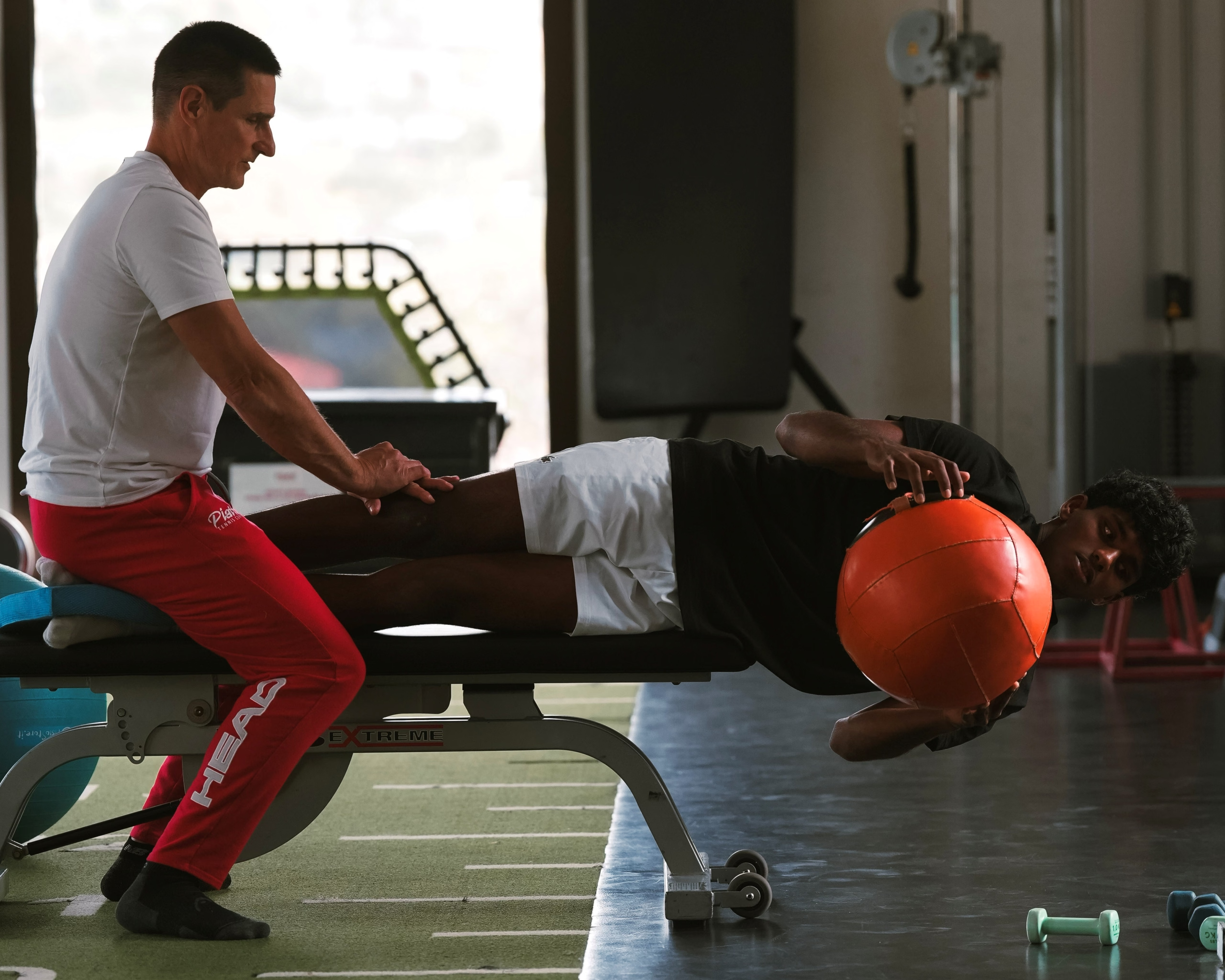
Strength training should begin at the earliest age. The problem is that when we mention strength training, people automatically think about heavy weights, squats, bench presses, etc. Instead, we should focus on preparing young athletes biomechanically, using progressive loading, until they physically mature and unlock the hormonal support needed to safely and effectively transition into heavier strength training.
There must be some well-structured strength training approach already from the age of 11–12.
So, in simple terms, there must be some well-structured strength training approach already from the age of 11–12. At this age, the density of this type of training can be twice a week, with the goals of teaching fundamental movement patterns such as squat, lunge, hinge, push, pull, and locomotion. Later on, we can use this training stimulus 3 or 4 times a week, again using appropriate volume and intensity from a progressive standpoint, knowing when we want these kids to be ready for more loading.
In general, there are no good or bad exercises, but some are more, and some are less appropriate for individuals depending on their biological maturation and technical proficiency. For example, consider a split squat: would we train this movement in a 12-year-old using dumbbells or a barbell on their back with the same load? It is far better to use a more proximally oriented load and not unnecessarily compress the spine by placing the weight far from the center of mass.
Editor’s note: The American Academy of Pediatrics stresses good technique and qualified supervision. The right load and frequency depend on the child’s experience and ability to perform the movement.
Let’s first define what rapid growth is to understand it better. An athlete is in their peak adolescent growth spurt when they typically grow between 8 and 12 cm/year. On average, girls experience rapid growth earlier (around 11.5–12 years old), whereas boys reach it later (around 13.5–14 years old), but it can also happen later.
Ideally, during periods of rapid growth, training workload/volume should be reduced.
Ideally, during periods of rapid growth, training workload/volume should be reduced while carefully managing training intensity to focus on movement quality, mobility, and core stability to prevent growth-plate overuse injuries and accommodate temporary structural imbalances. From an injury-prevention perspective, monitor the tennis-specific practice load carefully. During that period, I suggest reducing tennis practice volume by 20–30% and replacing it with adequate physical training.
One interesting thing about this period is that, as bones grow faster than muscles, muscles are pulled taut. This natural muscular tension increases mechanical elasticity, creating a physiological window to generate power. Keep efforts short (under 5 seconds) to avoid fatigue, and focus on explosive, non-fatiguing movements like sprinting, jumping, and throwing during this rapid growth phase.
Another critical point: you need to work on mobility daily.
Another critical point: you need to work on mobility daily; this is the ultimate flexibility window. If you don’t address mobility and flexibility training during growth spurts, athletes may never be as flexible as they should be later in their careers.
Editor’s note: The 20–30% reduction is Sirola’s coaching recommendation. A review of flexibility training in young people found that both children and adolescents improved their range of motion. It did not establish a single growth window after which it is too late to improve flexibility.
Take care of their movement hygiene daily. Just as we shower daily and brush our teeth for personal health and hygiene, we need a similar approach to protect our joints, tendons, and muscles to stay as healthy as possible.
Tennis, like every other sport, involves repetitive movements that overload parts of our musculoskeletal system. That’s why we need to build a habit of what I call daily system resets. Building habits of manual therapy 2–3 times a week, daily myofascial release, and mobility care before every training or practice is fundamental to athletes’ health and longevity.
A Junior Training Week: Practice, Matches and Recovery
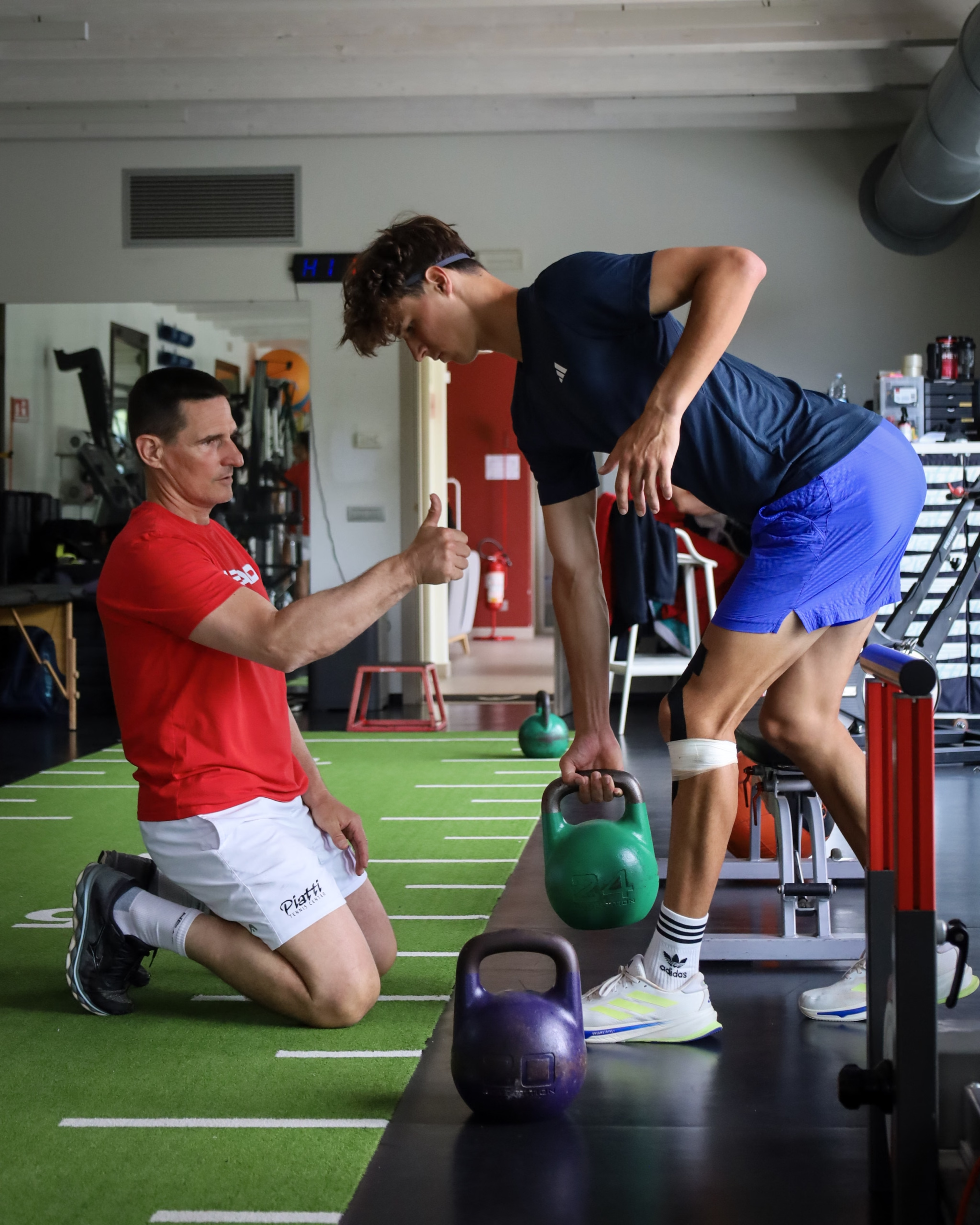
This is something that should be planned on a yearly basis. Regarding the practice-to-physical-training ratio, I think, for junior tennis players 16 or older, it should be around 60/40 in favor of competition. This way, players have enough time to compete while still developing their physique.
When we are talking about weekly training periodization, where we should differentiate between 3 types of training stimuli, an example of a well-balanced training week can look like this:
| Day | First half | Second half |
|---|---|---|
| Monday | Stimulation | Stimulation |
| Tuesday | Development | Adaptation |
| Wednesday | Stimulation | Recovery |
| Thursday | Development | Adaptation |
| Friday | Stimulation | Stimulation |
| Saturday | Development | Adaptation |
| Sunday | Recovery | Recovery |
This example includes 3 hard training days (Tuesday, Thursday and Saturday), 2 medium training days (Monday and Friday), 1 full rest day (Sunday), and an additional half day for recovery (Wednesday). In this periodization model, tennis practice is combined with strength and conditioning.
I would say nothing different from what the pro players are doing. To become a pro one day, young players need to build a habit of using the correct warm-up, cool-down, and recovery modalities available to them on the junior circuit. There is no one-size-fits-all type of warm-up; ideally, warm-ups should be individualized as much as possible.
For example, if someone has restricted ankle range of motion, they should spend more time addressing it during the warm-up. Or if someone is coming back from a low back injury, they need to work on hip and thoracic mobility along with core stabilization more than they are used to.
Outside of regular mobility, stability, and SAQ-type drills, I suggest including different types of neurocognitive stimulation as well. Recovery must include cool-downs, stretching, and using heat and cold whenever needed and/or possible to speed up recovery.
To the list of sleep, nutrition, and hydration, I will add another important one: less screen time, especially in the evening and at night. Blue light can disrupt sleep by suppressing melatonin production and reducing slow-wave (deep) sleep, which is fundamental for good recovery.
Less screen time, especially in the evening and at night.
With all the travel and time zone changes, it is important to build healthy sleep habits, such as sleeping in a dark room at around 18–20 degrees Celsius. Total sleep time should be 8–9 hours whenever possible.
Regarding nutrition, hydration, and supplementation, I suggest finding a professional sports dietitian who can create an individualized plan. One player may be losing more minerals through sweating, another may need to increase muscle mass, and a third may need to reduce body fat percentage. All of them need a different approach.
Editor’s note: Sleep needs vary by age. The American Academy of Sleep Medicine recommendations, summarised by the CDC, are 9–12 hours per 24 hours for ages 6–12 and 8–10 hours for ages 13–18.
Preparing for the Professional Tour
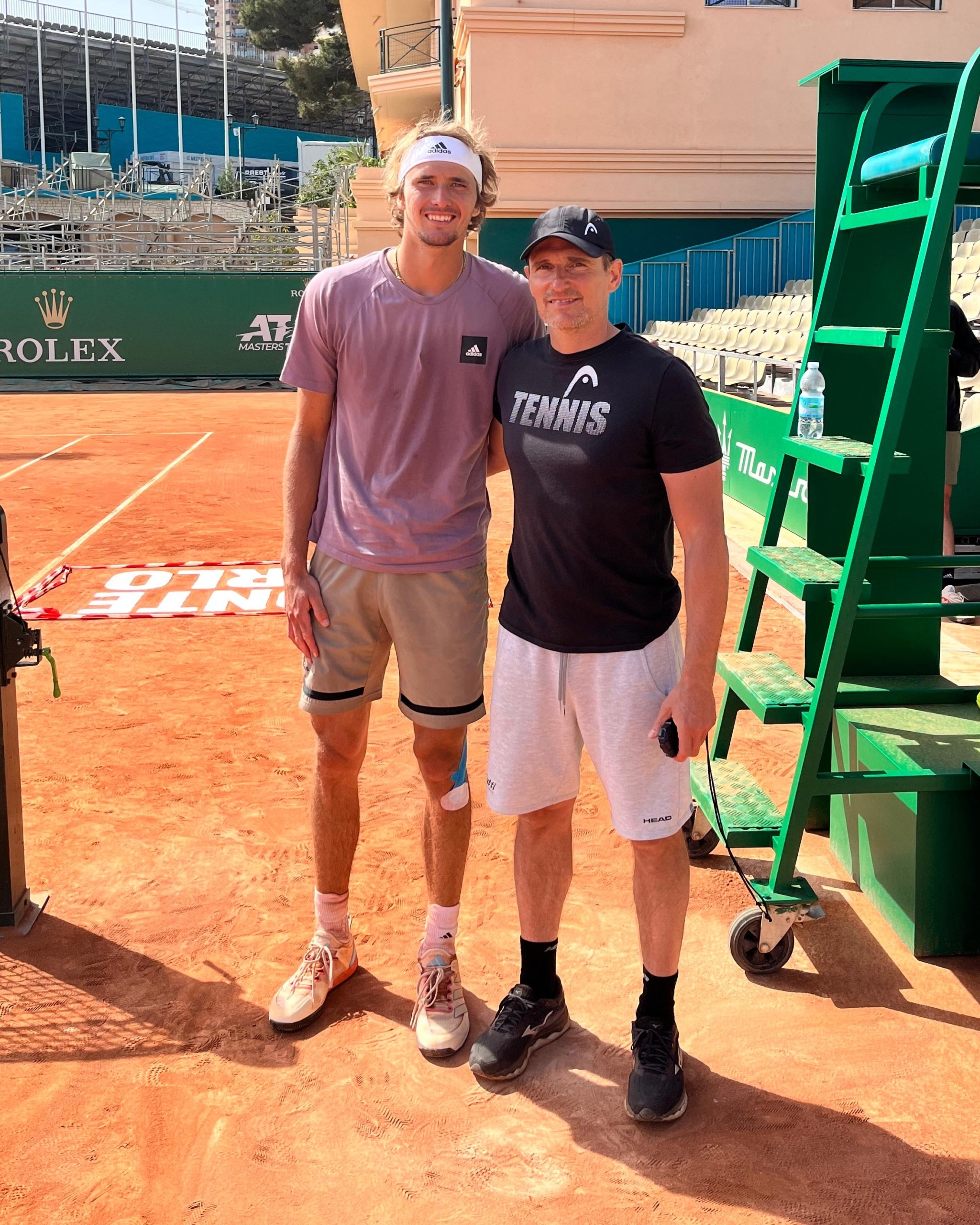
When transitioning from junior to professional tennis, you start playing against grown, physically mature men. Beyond the much higher tactical demands, a major challenge is the speed of play. To prepare, young players should practice with pros from time to time to get used to the speed of play at that level.
Many junior players lack muscle mass, power, and speed compared to older players, so working on their bodies during the last 1–2 years on the junior tour to prepare for next year’s transition is important.
For coaches, the biggest mistake is rushing. What I mean is prioritizing tennis practice and matches too much, too soon, over physical development. Tennis is a highly technical and tactically demanding sport. Its wide range of shots, each with its own technical demands, requires more practice time to master. With that in mind, the physical side often gets neglected, and as a result, we end up with over-specialized, underdeveloped young bodies that develop overuse symptoms or injuries typically seen in older players.
For coaches, the biggest mistake is rushing.
My number one piece of advice to parents is to leave it to professionals to work with their kids, especially if they don’t have a tennis background, meaning they weren’t players themselves.
To the players, don’t overthink or overanalyze daily. Instead, think long-term! It is not easy for young athletes and young people in general to be patient, especially in a modern world that is spinning faster than ever before. With all that, young athletes must live up to their own and others’ expectations, which creates an even greater sense of urgency.
Thinking long-term means surrounding yourself with people you trust and working on yourself, meaning developing the habits, mindset, character, and emotional maturity that support your performance. Learning to manage frustration after an error or tough loss, and viewing mistakes as feedback rather than failure, can help greatly during daily challenges. To better manage pressure and anxiety, develop pre-game routines, breathing techniques on and off court, and positive self-talk during high-pressure situations.

Thank you, Dalibor, for showing our readers how you plan a junior’s training week and where you leave room for other sports, recovery and life beyond the next match. 🎾
Key Takeaways for Junior Players & Parents
- Leave room for another sport.Sirola likes gymnastics and judo for balance, and basketball and football for changes of direction. Start with what your child can try locally.
- Learn the movement before adding weight.A squat, lunge, push or pull gives a coach something to observe. How well a player can control the movement matters more than matching a teammate’s load.
- Revisit the schedule during a growth spurt.Sirola reduces time on court and gives movement quality and mobility more attention. The percentage he mentions describes his approach, not a target for every player.
- Put recovery on the calendar.In his example, Wednesday includes a half-day of recovery and Sunday is a full rest day. The harder sessions fall on Tuesday, Thursday and Saturday.
- Give the warm-up a purpose.Sirola’s example is a player with limited ankle movement: the warm-up gives that player extra time to work on the ankle.
- Prepare for the pace of pro tennis.Occasional practice with professionals lets older juniors feel the difference in ball speed and find out what they still need to work on.
About Dalibor Sirola


Dalibor Sirola is a strength and conditioning coach with more than 25 years of experience. He studied at the Faculty of Kinesiology in Zagreb and worked with athletes in sports ranging from alpine skiing to basketball before Ivan Ljubicic introduced him to professional tennis. At Piatti Tennis Center in Bordighera, Italy, he works with young players as head of performance. His work on tour has included Jannik Sinner, Maria Sharapova and Novak Djokovic.
For help planning food and drinks around training, read our interview with tennis dietitian Sandra Soler.
You can find more conversations with coaches and health professionals on our Junior Tennis Experts page.