Novak Djokovic Junior Years reveal how a 6-year-old boy from Serbia became the greatest player in tennis history.
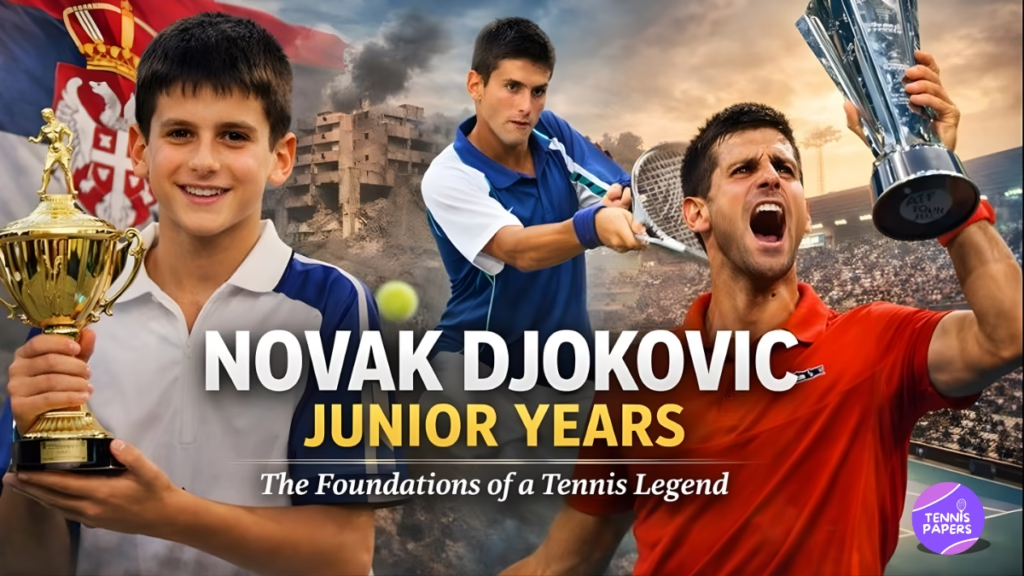
Table of Contents
Who Was Novak Djokovic as a Junior?
Novak Djokovic’s junior years (1987–2005) were shaped by war in Serbia, mentorship from Jelena Gencic, and elite training at the Niki Pilić Academy in Germany. In 2005, he broke into the ATP Top 100 at just 18 years old.
The making of a champion (1987–2005)
Introduction
Novak Djokovic’s junior years reveal the foundation of one of the greatest careers in tennis history. Born in 1987 in Serbia, Djokovic was discovered at age six by legendary coach Jelena Gencic and shaped by war, financial hardship, and elite training in Serbia and Germany.
This article explores Novak Djokovic’s early life and junior career, from practicing during the NATO bombings to his move to the Niki Pilic Tennis Academy, and the sacrifices that led him to break into the ATP Top 100.
Early television interview of Novak Djokovic during his junior years in Serbia.
The Beginning: Jelena Gencic and the “Golden Child”
How Novak Djokovic Junior Years Built His Mental Toughness
What truly defined Novak Djokovic Junior Years was the constant exposure to instability, discipline, and psychological pressure from an unusually young age.
Jelena Gencic: More Than a Coach
During Novak Djokovic Junior Years, Gencic did not only teach technique — she shaped a mindset built on patience and intellectual understanding of the game.
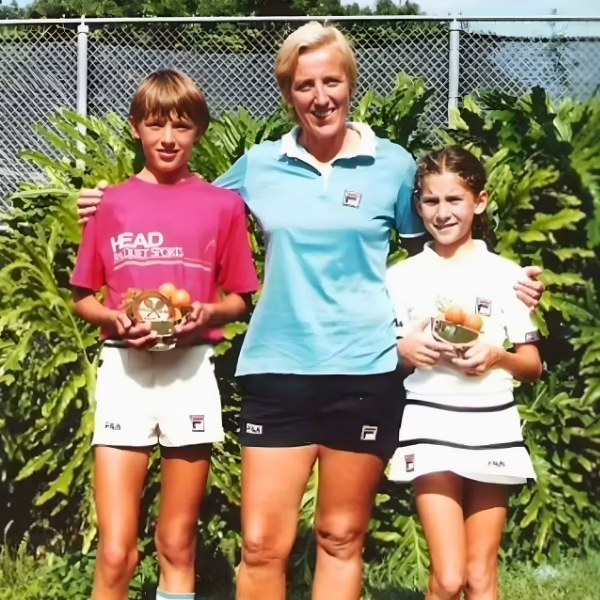
Jelena Gencic was much more than just a tennis coach to Novak Djokovic; he often referred to her as his “tennis mother.” She is widely considered the architect of his career and the person who first recognized his “golden child” potential.
The Discovery (1993)
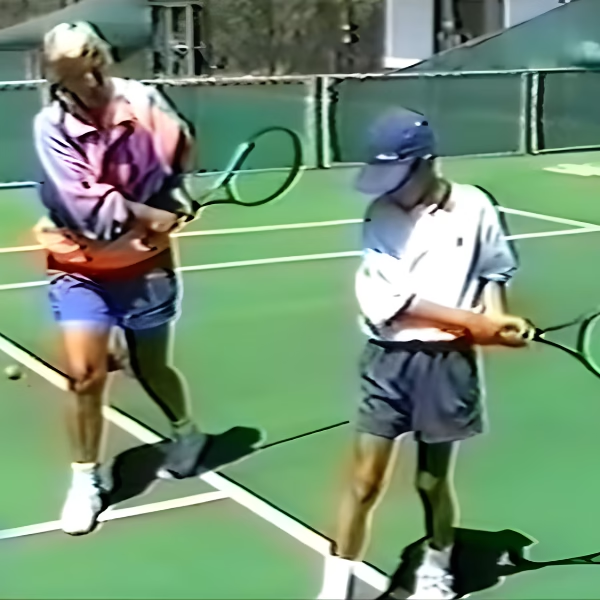
The story is legendary in the tennis world. In 1993, a 6-year-old Novak was watching tennis lessons through a fence at a camp in Kopaonik, where his parents ran a pancake parlor. Jelena noticed him and asked if he wanted to play.
🏔️ Kopaonik, Serbia 🇷🇸 – mountain of fresh air & nature

The “Golden Child”
After just three days of hitting with him, Gencic told Novak’s parents:
“This is the greatest talent I have seen since Monica Seles. You have a golden child.”
A Vision from Age 6
From age six, she convinced Novak that he would be No. 1 in the world. They even practiced the “Wimbledon trophy ceremony” using makeshift cardboard trophies.
A Holistic Education
Gencic was a true polymath. She was a top-level handball player, a tennis champion, a student of art history, and a television director. She believed a champion needed to be a “complete person,” not just an athlete.
Music & Art
She encouraged Novak to listen to classical music (like Tchaikovsky) to help him visualize his shots and find a rhythm.
Philosophy
She introduced him to the concepts of visualization, yoga, and even Tai Chi, which remain cornerstones of his mental strength today.
The “Seles” Model
Having discovered Monica Seles earlier, she used her as an example for Novak’s discipline, teaching him early on about the importance of nutrition and a professional routine.
🏆 Jelena Gencic’s Legacy of Champions
A Rare Resume
Novak wasn’t her only success story. Jelena Gencic has one of the most incredible “discovery” resumes in sports history. She played a role in the early development of:
- Monica Seles (9 Grand Slams)
- Goran Ivanisevic (Wimbledon Champion and later Novak’s coach)
- Iva Majoli (French Open Champion)
The Final Chapter (2013)
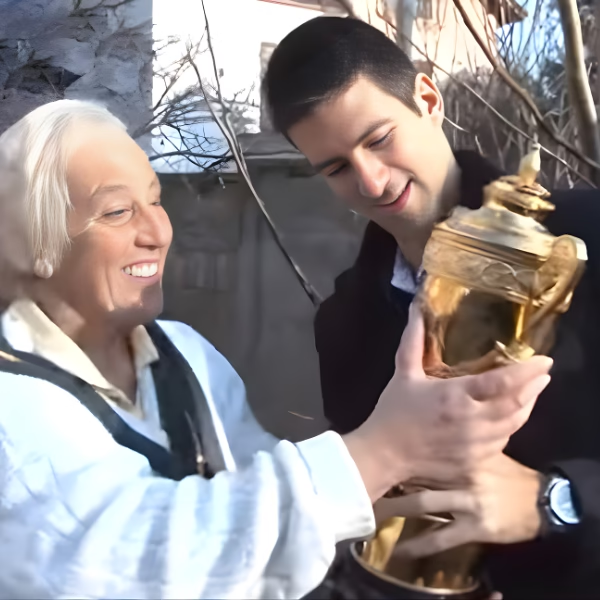
Gencic passed away in 2013 at the age of 76, during the French Open. Novak’s team kept the news from him until after his match to protect his focus, and he was devastated upon learning of her death. He famously dedicated his subsequent successes to her memory.
🧳 Leaving Serbia: War, Growth, and the Need to Move Forward
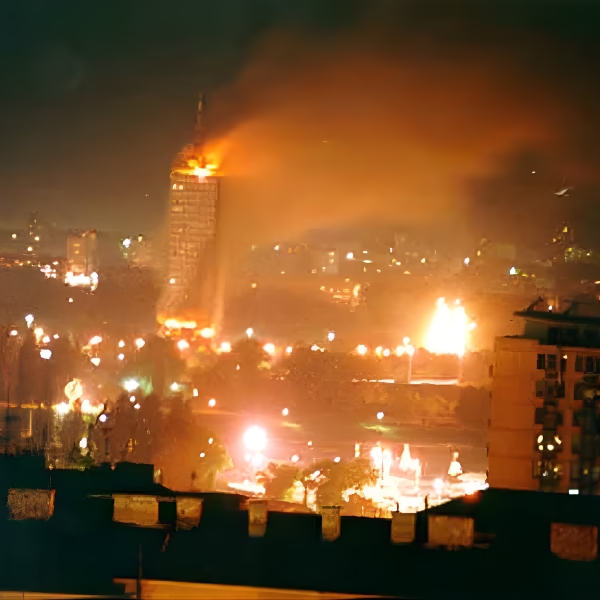
To continue Novak’s journey, the transition to Germany was a desperate and necessary move driven by both the NATO bombings of Serbia in 1999 and the fact that Novak had already “outgrown” the competition in Belgrade.
Jelena Gencic realized that to become World No. 1, Novak needed world-class facilities and a safer environment to focus entirely on tennis.
Few stories in tennis history are as dramatic as Novak Djokovic Junior Years, shaped in the shadow of NATO bombings and economic hardship.
🏟️ The Move to the Niki Pilic Tennis Academy (1999)
The Decision
At age 12, with Gencic’s guidance and his parents’ massive financial sacrifices, Novak was sent to the Niki Pilic Tennis Academy in Oberschleißheim, near Munich.
The move to Germany marked a decisive turning point in Novak Djokovic Junior Years, exposing him to a more structured and international training environment.
The Connection
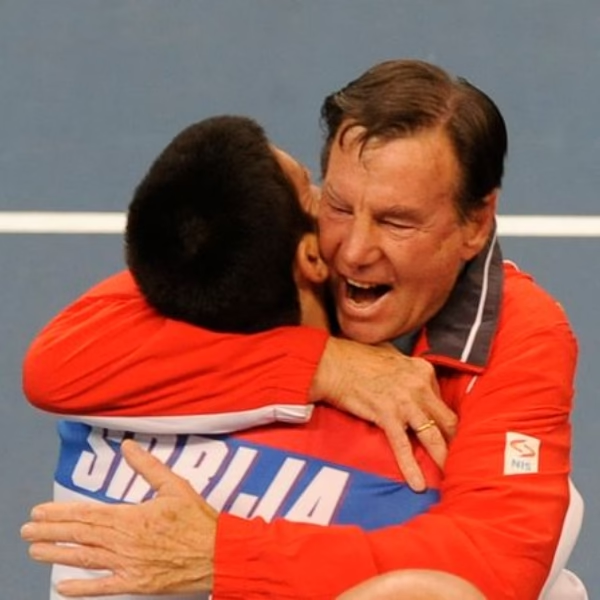
Jelena reached out to Nikola “Niki” Pilic, a legendary Croatian coach and former French Open finalist. Despite the tensions of the era, Pilic agreed to take the young Serbian talent under his wing.
Discipline and First Impressions
Pilic was known for his “Prussian” discipline. On Novak’s first day, he arrived 20 minutes early for practice. Pilic famously said:
“I knew he was special because he was the only kid who never complained about the hard work.”
The “Little Professional”
While other kids were interested in video games or hanging out, Novak was already focused on stretching, diet, and recovery lessons he had first learned from Genčić.
⚔️ Training During the War
Life Between Two Worlds
The move was bittersweet. While Novak was safe in Germany, his family remained in Belgrade during the bombings.
He spent four years at the academy (from age 12 to 16).
The Empty Swimming Pool (Club 11. April)
During his visits back home, he famously practiced in an emptied swimming pool at the “11. April” sports center because it was one of the few places safe from the sirens and provided a makeshift court.
The Setup
They laid down a carpet-like surface at the bottom of the pool. Because it was a pool, there were concrete walls just a few feet behind the baselines.
The Impact
This forced Novak to develop incredibly short, compact backswings and lightning-fast reflexes. If you didn’t react quickly, the ball would ricochet off the concrete wall and hit you.
The Mentality
Novak often says that practicing while hearing air-raid sirens in the distance made him fearless. To him, no pressure on a tennis court could ever compare to the pressure of surviving those nights.
This period forged the “wolf mentality” he often speaks about—the resilience born from surviving a war and being a lonely teenager in a foreign country.
💰 Srđan Djokovic and the Financial Gamble
A Family Without Wealth
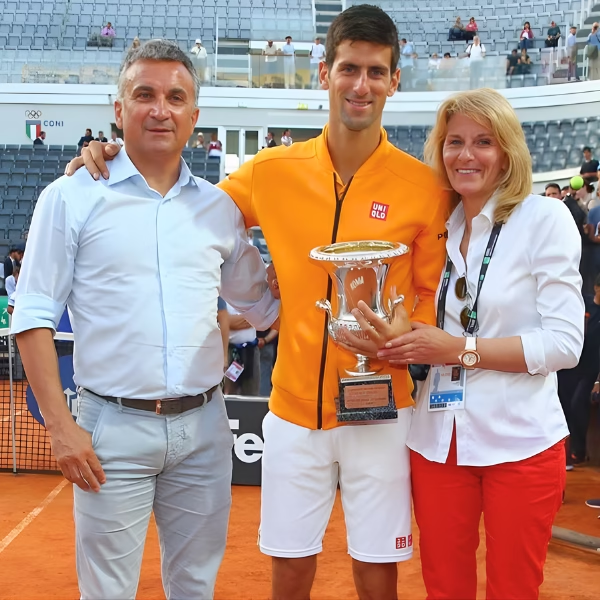
Novak’s father, Srđan, is a polarizing figure, but even his critics admit that Novak would never have made it without his father’s absolute (and risky) obsession.
The Djokovic family was not wealthy; they ran a small pizzeria and pancake shop in the mountains.
Loan Sharks and Survival
Funding a career at the Niki Pilić Academy in Germany cost thousands of Deutsche Marks (and later Euros) per month—money they simply didn’t have.
Srđan has openly admitted to taking loans from “street lenders” and loan sharks at predatory interest rates. He once described it as “selling the family’s soul” to keep Novak’s dream alive.
The “One Room” Life
While Novak was in Germany, the rest of the family lived in a tiny apartment, often unable to pay for basic utilities because every cent was sent to Munich.
The Ultimate Test
Srđan famously walked into Novak’s room, laid out all the family’s remaining money on the table, and said:
“This is all we have left. Either you become the best, or we lose everything.”
📈 Breaking Into the ATP Top 100 (2005)
By 2005, the foundations built during Novak Djokovic Junior Years were evident as he began climbing the professional rankings, eventually breaking into the ATP Top 100.
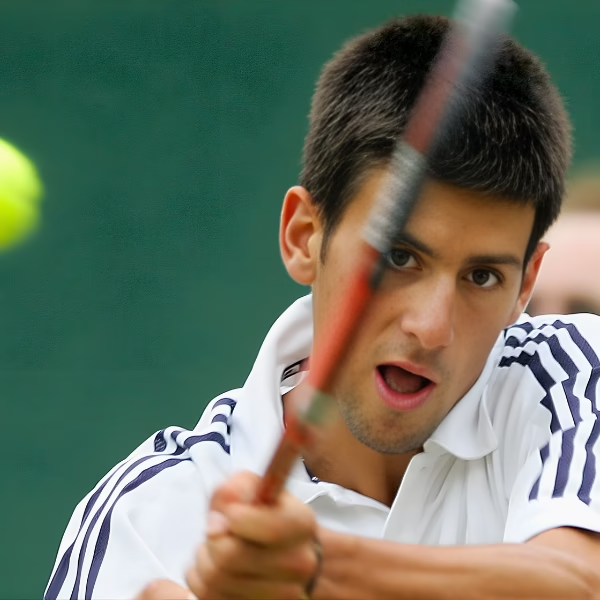
Novak Djokovic first broke into the ATP Top 100, according to the official ATP rankings, on July 4, 2005, at the age of 18.
Wimbledon 2005
Novak entered the Top 100 following a run at Wimbledon 2005, where he reached the third round as a qualifier.
The “Magic Circle”
Ranking jump: No. 128 → No. 94.
Entering the Top 100 guaranteed direct entry into Grand Slam main draws and significant prize money—even with first-round losses.
🔓 Clearing the Debts (2005–2006)
The Debt Spiral
By 2005, Srđan Djokovic had been borrowing money for nearly six years at monthly interest rates as high as 15% to 30%. There were times when the family owed hundreds of thousands of dollars to lenders who were “not to be trifled with.”
The 2006 Season
Novak won his first ATP title in Amersfoort (July 2006) and reached the quarterfinals of Roland Garros. By the end of 2006, he was No. 16 in the world and had earned over $600,000 in prize money—enough to finally pay back the lenders in full.
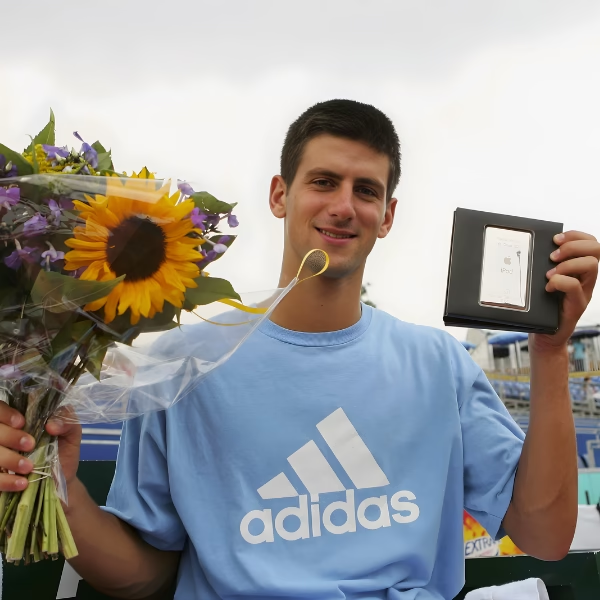
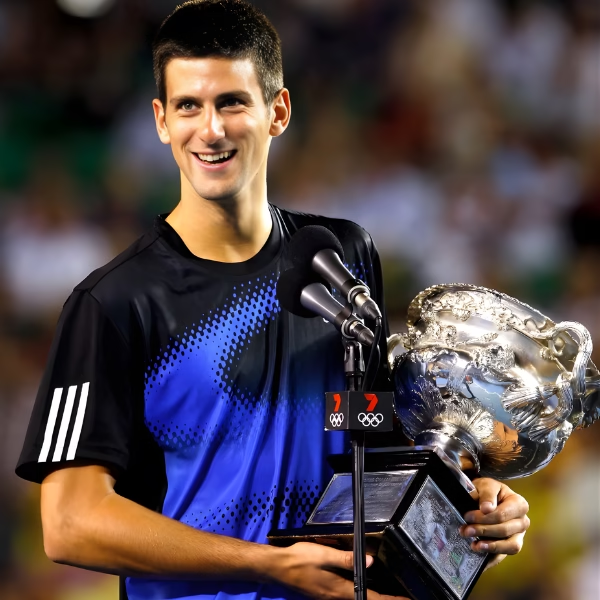
The First Grand Slam (2008)
It wasn’t until Novak won the Australian Open in 2008 that the family moved from “repaying debt” to “generational wealth.”
🇬🇧 The British Offer: A Career-Changing “What If” (2006)
The Offer
In 2006, the British Lawn Tennis Association (LTA) approached Novak’s parents with an extraordinary proposal:
- British citizenship for the entire family
- Unlimited funding
- Training at the National Tennis Centre in London
Why It Was Considered
The financial pressure was immense. Novak later admitted:
“It was very tempting for my parents at that time because it would have solved all the problems.”
Why They Said No
The decision ultimately came down to identity.
- Novak felt he could never play with the same fire under another flag
- The hardships in Serbia shaped his mentality
- Comfort might have cost him greatness
The Draper Connection
One of the people involved was Roger Draper, then Chief Executive of the LTA and the father of future British star Jack Draper.
🤝 Novak Djokovic & Andy Murray: From Childhood to Rivals
Friends Since Age 11
They first played each other at an under-12 tournament in Tarbes, France. Murray won 6–0, 6–1.
A Shared Path
Born one week apart in May 1987, they grew up in the same age categories and even played doubles together at the 2006 Australian Open.
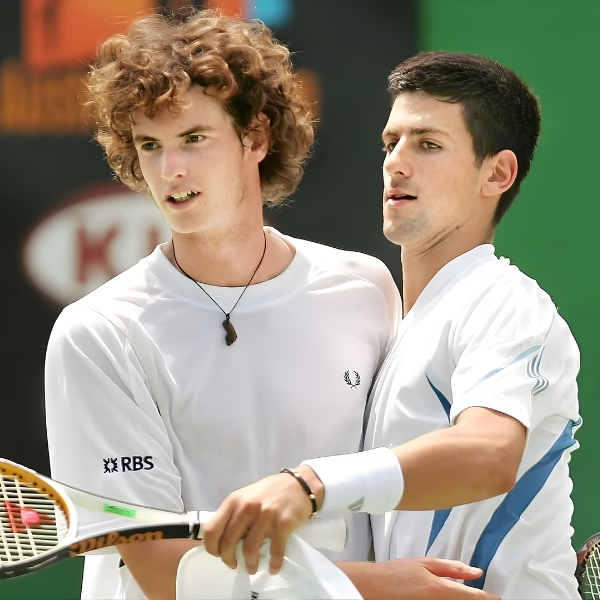
From Friends to Rivals
Between 2011 and 2016, they played seven Grand Slam finals. Their friendship cooled, but mutual respect never disappeared.
🔄 The Ultimate Twist (2025)
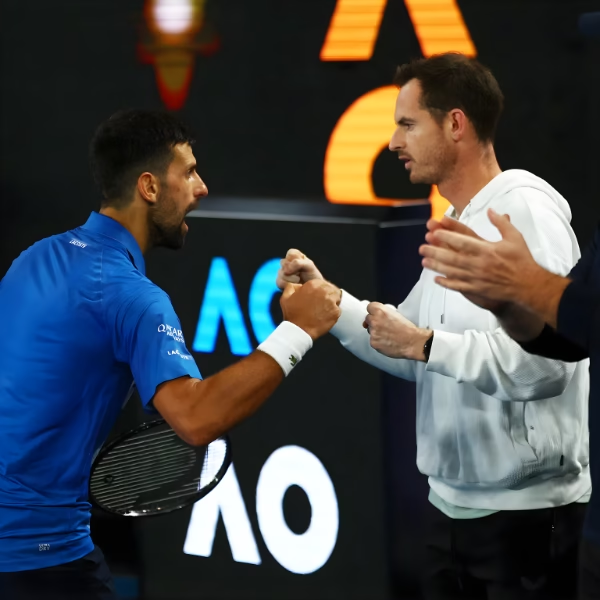
After Andy Murray retired in 2024, he joined Novak Djokovic’s coaching team for the 2025 season.
Novak sought a new spark to compete with the younger generation, and one of the greatest rivalries in tennis history came full circle.
Conclusion
To understand Novak Djokovic’s greatness, you must understand his junior years. War, debt, sacrifice, and unwavering belief forged not just a champion but one of the most resilient athletes in sports history.
🏆 Palmares Junior Years
Novak Djokovic’s early career (roughly 1997–2003) was marked by rapid dominance on the European junior circuit. Even as a young teenager, he was already considered a “prodigy,” finishing his U14 and U16 seasons at the very top of the continental rankings.
Here is a breakdown of his palmarès (achievements) from ages 10 to 16:
U14 Category (Ages 10–14)
Djokovic’s breakthrough on the international stage happened in 2001 when he was 14. He effectively swept the European titles.
- European Champion (U14): In 2001, he became the European champion in singles (defeating Lukáš Lacko), doubles (with Bojan Božović), and the team competition (European Summer Cup).
- World Junior Championship: Won the Silver Medal in the team competition for Yugoslavia (2001).
- Year-End Ranking: Finished 2001 as the No. 1 ranked U14 player in Europe, notably ahead of his future rival Andy Murray.

U16 Category (Ages 15–16)
He continued this trajectory as he moved into older age groups and began playing ITF Junior and professional satellite events.
- European Champion (U16): In 2002, he led the Serbian squad to victory in the U16 European Summer Championship in Le Touquet, France, going undefeated (6–0) in his matches.
- Junior Davis Cup: Represented Yugoslavia in the 2002 Junior Davis Cup, where he was ranked as the world’s best U16 player.
- Key Junior Titles (Singles):
- Messina (Italy), 2001: G2 Clay tournament.
- Livorno (Italy), 2001: G1 Clay tournament.
- Prince Cup (Miami), 2002: His first overseas title in the U.S.
- Derby Cadets (France), 2002: Defeated Gaël Monfils in the final.
- Year-End Ranking: Became the No. 1 ranked U16 player in Europe in 2002.
Transition to Pro (Age 16)
In 2003, at the age of 16, Djokovic officially turned professional and began shifting his focus away from the junior circuit.
- First ITF Futures Title: Won his first professional-level tournament at the Serbia & Montenegro F1 in June 2003.
- Grand Slam Junior Debut: Reached the 3rd round of the French Open and played the US Open juniors.
- ATP Ranking: By the end of his 16th year (early 2004), he had reached a combined junior world ranking of No. 24 and was already climbing the ATP pro rankings.
Summary Table: Novak Djokovic junior career
| Year | Age | Achievement |
| 2001 | 14 | Triple European Champion (Singles, Doubles, Team) |
| 2001 | 14 | No. 1 European U14 Ranking |
| 2002 | 15 | European U16 Team Champion |
| 2002 | 15 | No. 1 European U16 Ranking |
| 2003 | 16 | Won first Professional ITF Futures title |