Junior tennis rankings vary depending on age group, region and level of competition. While the ITF Junior Tour governs global U18 competition, continental systems such as Tennis Europe, COSAT, ATF and CAT structure earlier stages of development across Europe, South America, Asia and Africa. In the United States, the USTA operates one of the most structured national junior ranking systems in the world.
Understanding how these ranking systems connect is essential for players, parents and coaches planning long-term progression. This guide provides a global overview before exploring each system in detail.
Table of Contents
🌍 ITF Junior Rankings (U18 World Tour)
The ITF Junior Rankings represent the official global ranking system for U18 players. Governed by the International Tennis Federation, the ITF World Tennis Tour Juniors includes tournaments ranging from J30 to J500 and Junior Grand Slams.
Points are awarded based on tournament category and round reached, operating under a 52-week rolling system. ITF rankings determine direct acceptance into higher-level international events and play a central role in junior-to-professional progression.
The official ITF World Tennis Tour Junior Rankings are published by the International Tennis Federation.
For a detailed breakdown of points, categories and strategic planning:
▶️ Read our complete guide to ITF Junior Rankings.
🇪🇺 Tennis Europe Rankings (U14 & U16 European Tour)
Tennis Europe Rankings structure junior competition across Europe at the U14 and U16 levels. Organized under Tennis Europe, the Tennis Europe Junior Tour includes national, regional and continental events that identify emerging European talents.
While Tennis Europe also organizes U12 tournaments, official ranking lists are maintained for U14 and U16 categories. Strong performance at these levels often serves as a stepping stone toward the ITF World Tennis Tour Juniors.
For a complete explanation of categories, points allocation and progression:
▶️ Read our full guide to Tennis Europe Rankings.
🇧🇷 COSAT Junior Rankings (U14 & U16 South American Tour)
COSAT Junior Rankings structure continental junior competition across South America. Organized under the Confederación Sudamericana de Tenis, the COSAT Junior Circuit primarily covers U14 and U16 categories and serves as the regional development pathway for South American players.
Strong performance within the COSAT system often precedes transition to the ITF World Tennis Tour Juniors, providing international exposure and competitive progression.
For a detailed breakdown of tournament categories and ranking structure:
▶️ Explore our full guide to COSAT Junior Rankings.
🇨🇳 ATF Junior Rankings (U14 & U16 Asian Tour)
ATF Junior Rankings organize continental junior competition across Asia. Managed by the Asian Tennis Federation, the ATF Junior Tour primarily covers U14 and U16 categories and supports the early international development of Asian players.
The ATF structure allows players to compete regionally before progressing toward higher-level ITF Junior events. Strong results at U14 and U16 level often facilitate transition to the ITF World Tennis Tour Juniors.
For a complete explanation of tournament categories and ranking progression
▶️ Read our full guide to ATF Junior Rankings.
🇿🇦 CAT Junior Rankings (U14 African Tour)
CAT Junior Rankings structure continental junior competition across Africa under the Confederation of African Tennis. The official continental ranking system primarily applies to the U14 category and plays an important role in early-stage international development.
While national federations may organize additional age categories, the continental CAT ranking list focuses on U14 competition across African member nations.
Strong performance at this level often precedes progression toward the ITF World Tennis Tour Juniors.
For a complete explanation of structure and progression:
▶️ Explore our full guide to CAT Junior Rankings.
🇲🇽 COTECC Junior Rankings (U14 Central America & Caribbean Tour)
COTECC Junior Rankings structure regional junior tennis competition across Central America and the Caribbean under the Confederation of Tennis of Central America and the Caribbean. The official regional ranking system primarily applies to the U14 category and plays a key role in early-stage international development.
While national federations may organize additional age categories, the regional COTECC ranking system focuses on U14 competition across member nations.
Strong performance at this level often precedes progression toward the ITF World Tennis Tour Juniors.
For a complete explanation of structure and progression:
▶️ Explore our full guide to COTECC Junior Rankings
🇺🇸 USTA Junior Rankings (U12-U18 USA Tour)
USTA Junior Rankings structure competitive junior tennis across the United States. Governed by the United States Tennis Association, the system includes sectional and national ranking lists across U12, U14, U16 and U18 divisions.
Unlike continental systems such as Tennis Europe or COSAT, the USTA operates as a national ranking structure within one country. Players progress from sectional events to national tournaments before transitioning to the ITF World Tennis Tour Juniors for international exposure.
For a detailed explanation of points allocation, tournament levels and progression:
▶️ Read our complete guide to USTA Junior Rankings.
🌍 UTR Rating (Universal Tennis Rating)
The UTR Rating (Universal Tennis Rating) is a global system designed to measure a tennis player’s actual level, regardless of age, gender or country. Unlike traditional rankings, which depend on points earned in tournaments, UTR rating tennis is based on match results and opponent strength.
Players are rated on a scale from 1.00 to 16.50, allowing direct comparison between players competing in different circuits such as ITF, Tennis Europe, COSAT, ATF or USTA. This makes UTR one of the most widely used tools for evaluating performance across the global junior tennis ecosystem.
For junior players, UTR rating tennis is especially valuable because it reflects current level rather than ranking position. It is often used by coaches, academies and college recruiters to assess players beyond national or regional systems.
Unlike ITF or continental rankings, UTR does not require participation in specific tours. Instead, it continuously updates based on match data, making it a dynamic indicator of progression.
How UTR fits into junior tennis rankings:
- 🎯 UTR Rating: measures actual playing level
- 🏆 ITF Rankings: measure international tournament results
- 🌍 Continental rankings (TE, COSAT, ATF): structure regional development
- 🇺🇸 USTA Rankings: track national competition in the United States
For a complete explanation of structure and progression:
▶️ Read our complete guide to UTR Rating Tennis.
How Junior Tennis Rankings Systems Compare
| System | Region | Age Categories | Progression Pathway |
|---|---|---|---|
| ITF | Global | U18 | Direct international pathway |
| Tennis Europe | Europe | U14 · U16 | Feeds into ITF |
| COSAT | South America | U14 · U16 | Feeds into ITF |
| ATF | Asia | U14 · U16 | Feeds into ITF |
| CAT | Africa | U14 | Feeds into ITF |
| USTA | United States | U12 · U14 · U16 · U18 | National to ITF pathway |
| UTR | Global | U14 · U16 · U18 | Cross-system level comparison |
How Junior Tennis Rankings Connect Globally
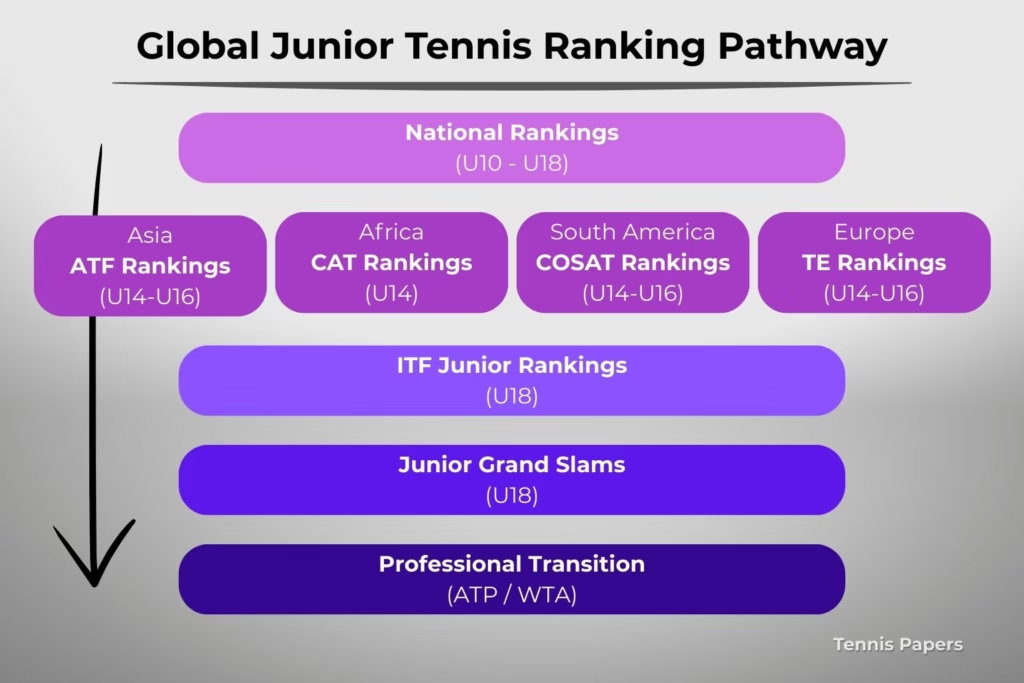
Junior tennis progression typically follows a structured pathway from national or continental competition toward the global ITF system.
In most regions, players begin by competing in national tournaments before advancing to continental circuits such as Tennis Europe, COSAT, ATF or CAT. Strong performance at U14 and U16 level builds the foundation for transition to the ITF Junior Tour at U18 level.
From there, top-ranked ITF juniors may qualify for Junior Grand Slams and eventually move toward professional ATP or WTA competition.
Understanding this layered structure helps families and coaches plan development stages realistically rather than rushing prematurely into international events.
What Are Junior Tennis Rankings?
Junior tennis rankings are performance-based systems used to determine tournament entry, seeding, and progression within youth tennis.
They are typically calculated based on:
- Tournament level
- Round reached
- Draw size
- Best results within a 52-week period
The diagram below summarizes how junior tennis rankings evolve from national competition to international ITF events and eventually toward the professional level.
Ranking Strategy: Smart Scheduling
Ranking progression depends heavily on tournament selection.
Winning a lower-category event may provide more ranking growth than losing early in a higher-category tournament.
Smart scheduling balances development, confidence, and ranking goals.
How Rankings Impact a Professional Career
Understanding junior tennis rankings allows families to make better tournament decisions and manage competitive progression more effectively.
Strong junior rankings can increase visibility, access to higher-level events, and academy opportunities.
▶️ Explore the full Junior Tennis Career Pathway
Common Ranking Mistakes Families Make
- Entering high-level events too early
- Ignoring national ranking foundations
- Over-traveling without strategy
- Focusing only on ranking instead of development
Conclusion
Junior tennis rankings play a central role in international player development. Understanding how national, continental and ITF systems connect helps families plan progression from U14 to U18 and ultimately toward professional tennis.
Frequently Asked Questions
What are junior tennis rankings?
Junior tennis rankings are performance-based systems used to determine tournament entry, seeding, and competitive progression for young players. Different organizations operate separate systems, including ITF junior rankings, Tennis Europe rankings, and national rankings such as the USTA. Rankings are typically calculated based on tournament level, round reached, and best results within a rolling 52-week period.
How do I get an ITF Junior ranking?
To get an ITF Junior ranking, a player must first register for an IPIN (International Player Identification Number) and then earn at least one point in an ITF World Tennis Tour Junior tournament. Points are awarded based on the tournament grade (from J30 to J500) and the round reached.
Do junior tennis rankings convert into ATP or WTA points?
No, junior tennis rankings do not convert into ATP or WTA professional ranking points. The junior ranking system is separate from the professional circuit. However, strong junior results can improve visibility, increase tournament access, and sometimes support wild-card opportunities when transitioning toward professional competition.
Why do junior tennis rankings sometimes drop suddenly?
Junior tennis rankings operate on a rolling 52-week system, meaning points expire exactly one year after being earned. If a player does not repeat strong results from the previous season, their ranking may drop even if their performance level remains stable. Understanding this expiration cycle is essential for long-term planning.
Should players prioritize national rankings or international rankings?
The answer depends on development stage. Younger players usually benefit from building a strong national ranking foundation before moving into Tennis Europe or ITF events. Once consistent performance is established, international competition becomes important for exposure, higher-level match experience, and long-term progression.